
app store badge google play badge

Get the mobile app for the best Kahoot! experience!

The Polytechnic University of Madrid boosts student engagement and learning retention using Kahoot! EDU across faculties

Location: Madrid, Spain
Key Wins
Institutional trust and validation: Kahoot! EDU is a preferred platform for both professors and students, surpassing competing tools in both pedagogical reliability for professors and high student engagement
A driver for academic success at UPM: A five-year study made by professors at the School of Industrial Engineering among 1,000 students shows that using Kahoot! EDU in the classroom has a direct correlation between consistent participation and higher exam scores at the engineering faculty
Improved exam rates: Professors from the Technical School of Forestry report that the percentage of students passing the exam improved by 31% compared to the average of the two previous years, when Kahoot! wasn’t in use
Effective use of AI features saves educators time: Professors at the School of Computer Science and Systems use AI features in Kahoot! EDU to quickly generate dynamic activities based on previous classroom topics and notes. This enables them to effectively review concepts with their students

The Polytechnic University of Madrid (UPM) is a public university founded in 1971 and headquartered in the Spanish capital, with 16 schools distributed across the city and one faculty. It houses a total of 24 research centers, institutes, and R&D&I (Research, Development, and Innovation) centers. It offers 57 bachelor’s degrees and more than 110 master’s degrees, with a total of over 40,000 undergraduate and master’s students, and more than 2,000 doctoral candidates.

A platform that faculty trust and students love

Like many universities around the world, the Polytechnic University of Madrid (UPM) is advancing the digital transformation of its learning methods. For UPM educators, the core goal of this evolution is to overcome a major classroom challenge: finding digital tools that help students actively learn, enjoy the process, and ultimately improve their academic results.

To tackle this challenge, UPM participated in a public tender together with 37 public universities to implement 1,000 Kahoot! EDU licenses across its faculties, while directly targeting student engagement in the modern classroom.
“In the past, we have experimented with multiple tools to make the in-class experience more interactive. Kahoot! EDU stands out as the tool of preference among students for learning, and among professors as a user-friendly solution that allows them to change the class dynamic very easily.”

Ana Belén Pérez-Martínez, Faculty Support Office at UPM

Today, Kahoot! EDU is widely used among professors, particularly to increase classroom engagement, boost student motivation, and help students perform better in exams while retaining knowledge.

Driving academic success for students at the School of Industrial Engineering through consistent weekly Kahoot! EDU check-ins

Professors Andrés Sebastián and Rubén Abbas, from the School of Industrial Engineering and the Department of General Energy, have been using Kahoot! EDU for many years, but it was in 2024 when they published a research paper exploring the benefits of using the platform in the classroom.

Their five-year-long study gathered a sample of more than 1,000 engineering students. The results showed consistent engagement in the classroom using Kahoot! EDU, and student participation in their weekly kahoots, directly correlated with higher exam scores.

“In this study we were looking into a correlation between the grades obtained in Kahoot!—both the total score and the number of correct answers—with the grades obtained in theory and problem-solving exams. The correlation was much higher with theory because of the type of questions we ask in Kahoot! is more similar to the type of theory questions we later ask on the exams.”

Rubén Abbas, Associate Professor at the School of Industrial Engineering, UPM

Andrés and Ruben have introduced Kahoot! as part of their curriculum establishing it as a pedagogical practice for their students. They use the first ten minutes of class to refresh their students’ knowledge from the lessons of the previous week. 

For this practice, they rely on the visual aspects of Kahoot! EDU offers them. For example, they are able to better explain concepts related to complex components of engineering such as engines, thermal machines and turbomachinery.


“What we are aiming for is to test conceptual understanding through the use of images. This includes analyzing specific outcomes, such as fluid interaction within a turbomachine like the inlet flow or the outlet angle. These visual elements allow us to ensure that students grasp the underlying concepts in a highly visual manner.”

Andrés Sebastián, Associate Professor at the School of Industrial Engineering, UPM

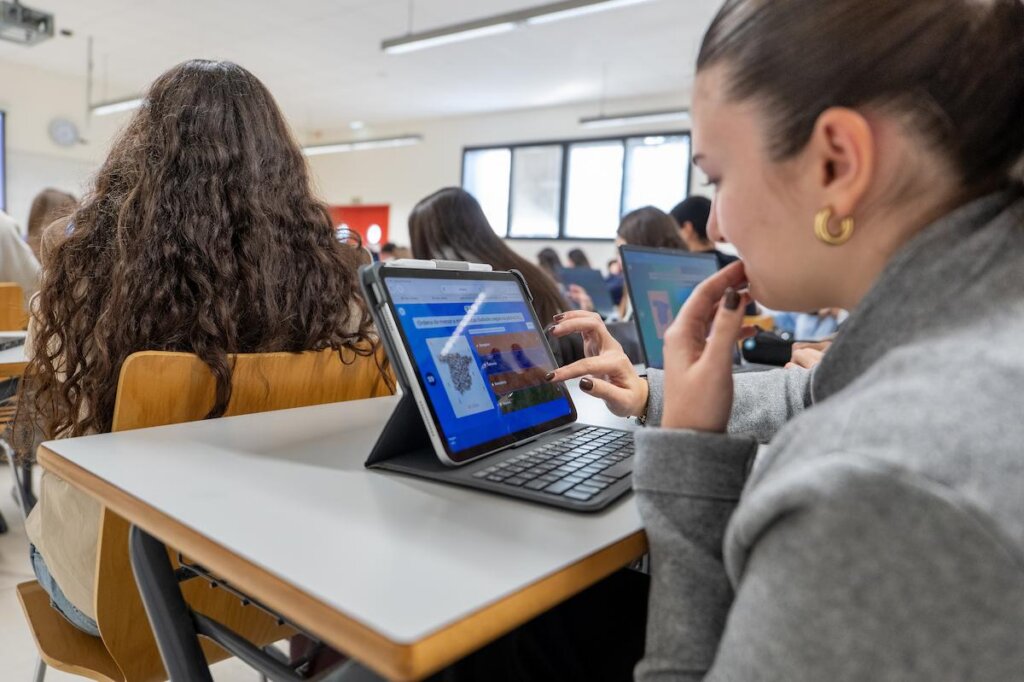
Spanish student interacting with Kahoot! in the classroom

Increased rates of exam success achieved by better knowledge retention at the Technical School of Forestry Engineering

The usage of Kahoot! EDU at the Polytechnic University of Madrid is supporting professors in increasing their students’ exam success rates. At the Technical School of Forestry Engineering at the Polytechnic University of Madrid, professors Pilar Pita and Roberto Salomón have noticed a correlation between the students who are successfully passing their exams and those who have been present in the classroom using Kahoot! EDU. 

“Our success rate, which is the percentage of students passing the exam, improved by 31% compared to the average of the two previous years when Kahoot! wasn’t in use.”

Pilar Pita, Engineer and Biology professor at the Technical School of Forestry Engineering at UPM

According to Pilar, her biology class is also showing a change in attitude towards in-class sessions. The key to this transformation is to make learning lighter by allowing all students to participate and discuss.

“The level of participation is universal whenever we use Kahoot! EDU. In a traditional lecture setting, it can be incredibly difficult to get students to respond to verbal questions. The format often feels heavy or passive. With Kahoot! EDU, however, everyone joins in immediately. The shift in classroom energy and engagement is truly remarkable.”

Pilar Pita, Engineer and Biology professor at the Technical School of Forestry Engineering at UPM

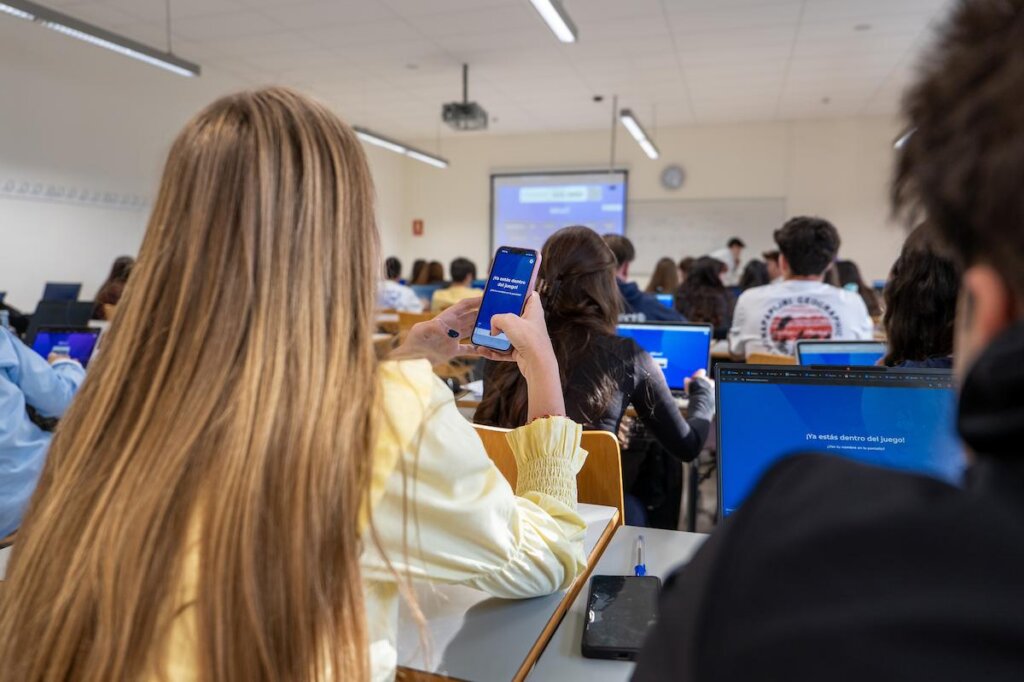
Spanish students interacting with Kahoot! in the classroom with mobile phones and tablets while looking into the professor explanation

Effective use of AI features within Kahoot! EDU support professors to deliver faster review of theoretical concepts among students

In the School of Computer Science and Systems, professor Daniel López relies on Kahoot! EDU AI capabilities to save time ahead of the preparation of his class. What he does is transfer his notes from previous lectures to a brand new kahoot that he uses to review knowledge retention among his students. 

“With Kahoot!’s new AI capabilities, I can upload my lecture notes and it generates a quiz based on them in a matter of seconds. It really helps me quickly create a fun dynamic to review concepts with my students.”

Daniel López, Professor at the School of Computer Science and Systems at UPM

Since his classes can become theoretically heavy, he uses Kahoot! also to increase student engagement and bridge the gap between the student and professor, which he considers helps him to improve his relationship with students.

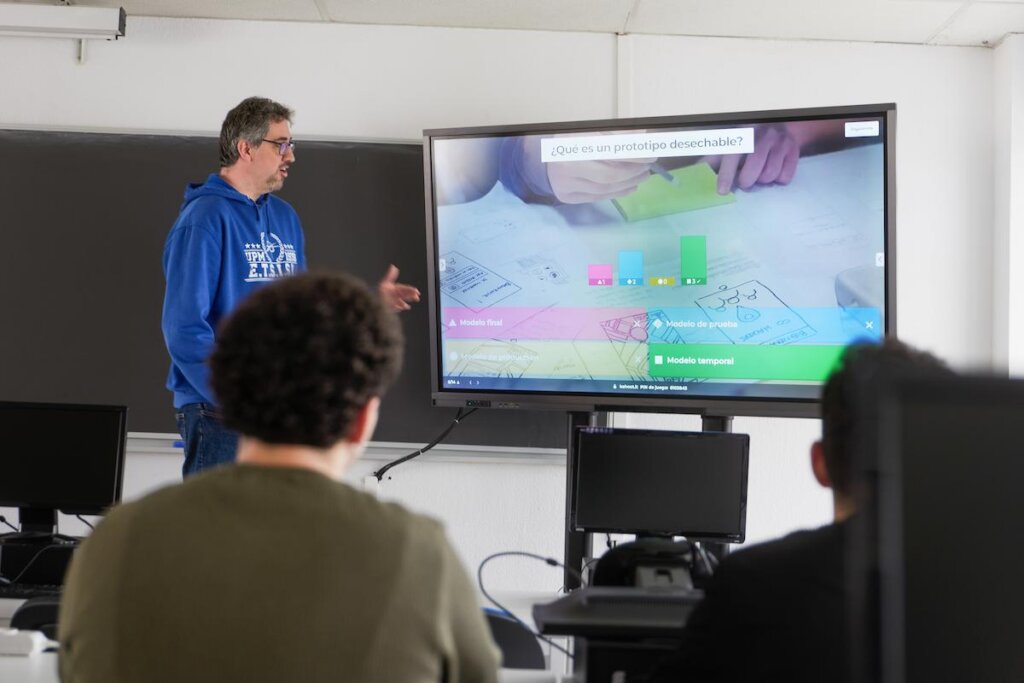
Professor in front of the classroom showing Kahoot! on the screen

The Polytechnic University of Madrid’s success story showcases Kahoot! EDU’s ability to drive digital transformation in higher education, leading to measurable academic improvements, increased student engagement, and time savings for educators. As UPM expands its use across faculties, its experience offers a clear roadmap for other institutions aiming to modernize learning and boost student success.

If you would like to share your Kahoot! story, please reach out to us via  LinkedIn, Instagram, or X. Inspire hundreds of thousands of educators worldwide to transform classroom energy, boosting engagement and motivation.

If you are interested in using Kahoot! in your school district, send us an email to getedu@kahoot.com or visit https://kahoot.com/schools