


Key takeaways
- Across two different introductory biology courses, students rated Kahoot! as less anxiety-inducing than most of the other classroom and study practices researchers assessed.
- At UC Irvine, Kahoot! was one of only two assessed practices where anxiety was not significantly related to students’ final course grades.
- At the University of Alabama at Birmingham, lower-performing students were particularly likely to report that Kahoot! helped reduce exam stress, motivated them to study, and supported their engagement with course material.
- Students’ responses suggest that game elements such as competition can help create a learning experience that feels relatively low-pressure.
Introductory STEM courses can place considerable pressure on students. In a study by Adkins-Jablonsky and colleagues (2021) two introductory biology courses were examined in two different universities. In these high-stakes courses, exams accounted for at least 70% of students’ overall grades.
The courses themselves were quite different. At the University of Alabama at Birmingham (UAB), students attended a less structured introductory biology course centered heavily on four exams. At the University of California, Irvine (UCI), students experienced a more highly structured course incorporating pre-class assignments, in-class activities, discussion sessions, weekly quizzes, midterms, and a final exam.
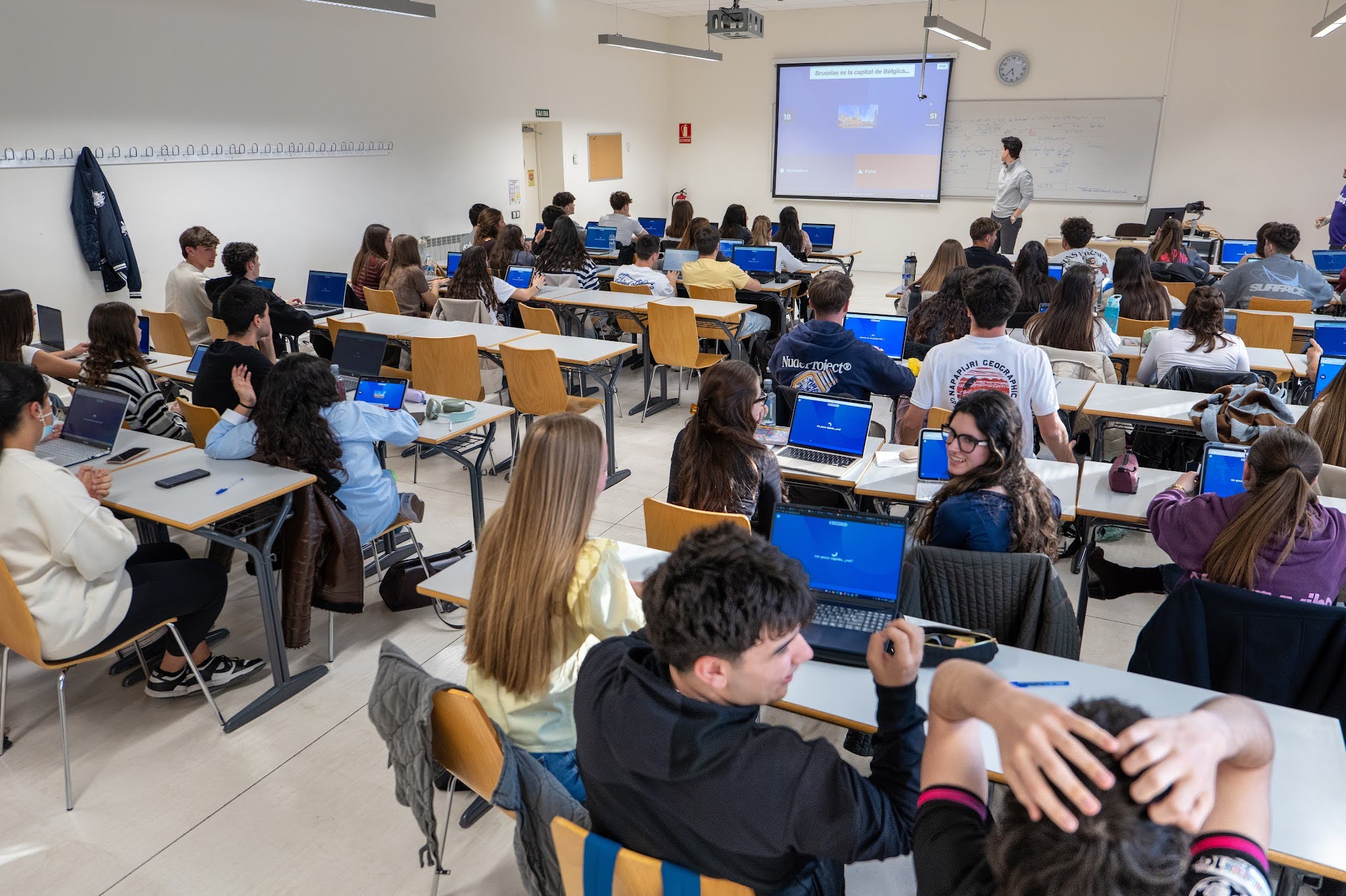
Researchers introduced non-graded Kahoot! sessions into both courses. They wanted to know if adding gamelike elements such as points, a countdown timer, and a leaderboard into an already high pressure course would create more anxiety for students or lessen it. Afterwards, they asked students about anxiety associated with Kahoot! games as well as a wide range of learning activities, from answering questions and working in groups to studying, office hours, quizzes, and exams.
At both universities, Kahoot! appeared near the low-anxiety end of the spectrum. At UAB, students rated Kahoot! significantly less anxiety-inducing than numerous common learning practices. At UCI, only answering clicker questions and listening to a teaching assistant’s lecture were rated as less anxiety-inducing.
In other words, adding Kahoot! games with competition and game mechanics into these high-stakes courses did not translate into a high-anxiety experience. Students rated the kahoot sessions as less anxiety-inducing than most of the other learning activities researchers assessed.
Students who struggled more with the course responded particularly positively to Kahoot!
Lower grades and higher anxiety are often linked together. At UCI, students who earned lower grades generally reported greater anxiety around classroom and study practices. Kahoot!, however, stood out: it was one of the two assessed practices for which anxiety was not significantly related to students’ final grades.
At UAB, lower-performing students were also more likely than their higher-performing classmates to report that Kahoot! helped them feel less stressed about an exam. They were also more likely to say it influenced their studying, helped them engage with lecture material and that they preferred it to clickers.
This shows that the students who are struggling with a course may also have the most to gain from learning experiences that invite participation without making every answer feel consequential.
When competition feels compatible with learning
Competition is sometimes assumed to add pressure to the classroom. However, among the UAB students’ comments that specifically addressed Kahoot!’s game elements, 75% were positive. Students associated the experience with competition, laughter, motivation, immediate feedback, and opportunities to test their knowledge.
A UAB student’s free responses specified low-anxiety as well as a positive mood amongst the peers:
“It’s fun and I don’t feel nearly as much anxiety with a kahoot quiz as I do with a canvas quiz.”
“I think Kahoot! before class positively engages students. There is competition, laughter, and self-critique. These actions would otherwise not take place without Kahoot!”
Not every student experienced the activity in the same way, and the researchers appropriately note that individual responses to timers, music, and competition can differ. But at the class level, the overall pattern was clear: students generally experienced Kahoot! as less anxiety-inducing than most of the other learning practices they encountered.
In these two introductory biology courses, Kahoot! gave students a way to check their understanding, engage with course material, and participate in a competitive learning experience without adding the level of anxiety associated with many other parts of the course.
Encouragingly, some of the strongest positive responses came from the students who were finding the course most challenging.
Explore how educators are using Kahoot! for formative review in higher education at kahoot.com/research.