

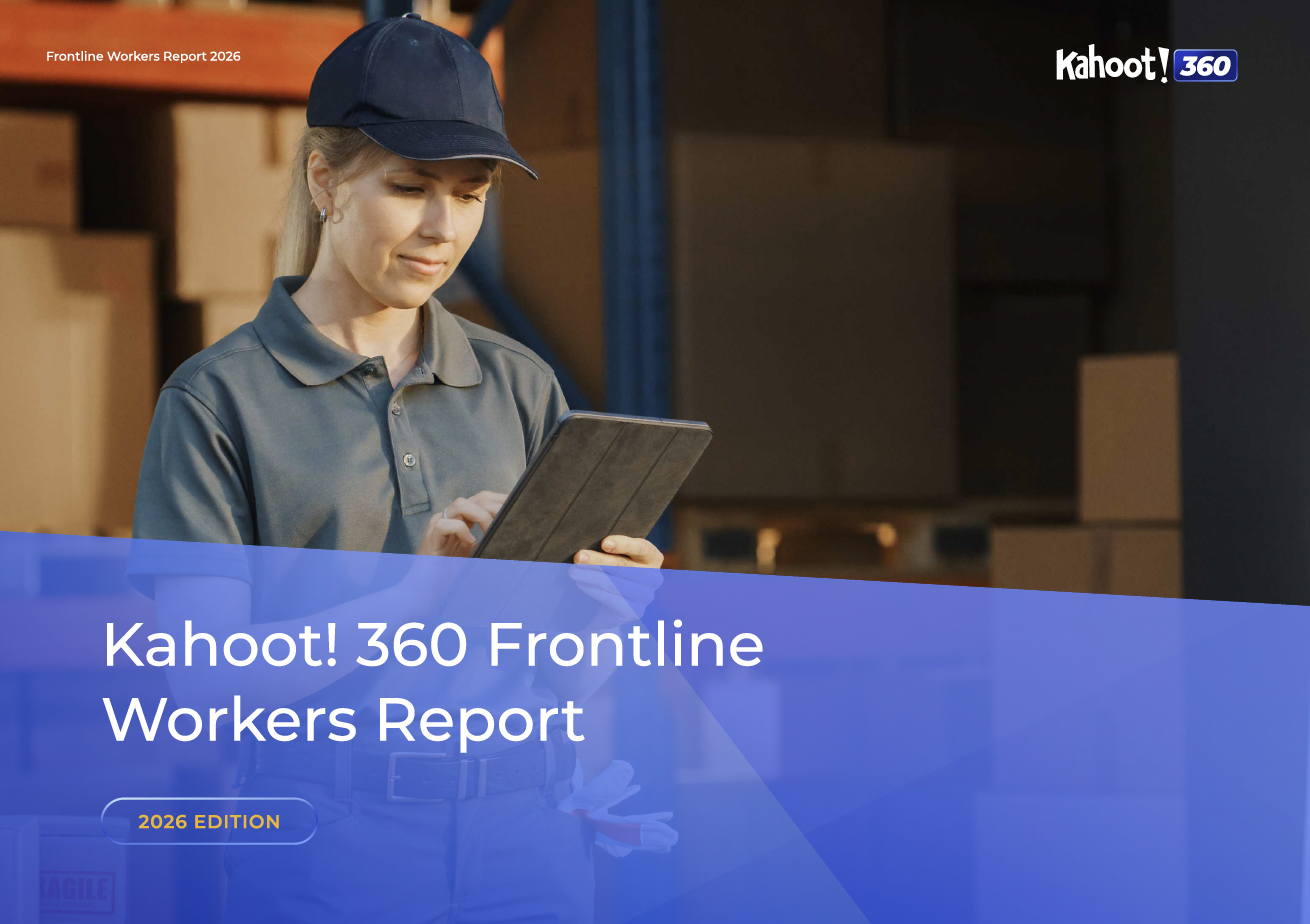
Oslo, 28 September, 2026 – New Kahoot! 360 Study Reveals 58% Of Frontline Workforce Asked To Carry Out Tasks Without Relevant Training; 22% Say Inadequate Training Contributed To Mistakes That Could Have Resulted In Physical Harm To The Public
Frontline workers are the often-unsung heroes of day-to-day life – from those who care for the sick, teach our children, prepare our meals, and deliver our parcels. The past couple of years have seen new measures introduced that aim to help frontline workers better navigate the demands of their jobs and feel more financially supported. But despite these changes, sentiment among workers suggests there’s still a long way to go.
A September 2026 survey of 4,000 frontline workers, commissioned by Kahoot! 360, the learning and workforce engagement platform supporting many of the US and UK’s leading frontline organizations, reveals that more than a third (39%) are considering leaving their jobs in the next 12 months. Workers cite increasingly hostile behaviour from the public, mounting financial pressures, staff shortages and inadequate training, all of which are contributing to burnout and increasing the risk of safety incidents in the workplace.
Training gaps are creating unnecessary risk
Training gaps are emerging as a serious safety concern for frontline workers and the public. More than half (58%) of frontline workers have been asked to carry out a task without the relevant training. The consequences can be serious. More than one in four (26%) say inadequate training has contributed to a mistake that could have caused physical harm to a customer, patient, passenger or member of the public, while 22% say inadequate training has put their own safety, or that of a colleague, at risk.
These training gaps come against a backdrop of persistent staff shortages, which are placing further pressure on already stretched frontline teams. Almost a fifth (18%) of frontline workers are impacted by staff shortages every day, and almost two in five (40%) are affected several times a week or more. The impact is taking its toll, with 50% of frontline workers saying they have experienced burnout in their current role. More concerningly, 45% believe staff shortages at their workplace are putting the public at risk. With fewer people available to cover essential work, gaps in training are creating another serious safety concern.
Customer behaviour an ongoing issue
For many, this pressure is compounded by increasingly difficult interactions with the public. Almost half (48%) of frontline workforce say they have experienced verbal abuse or threatening behaviour from customers or members of the public at work, while nearly a fifth (17%) believe customer behaviour has worsened over the last five years.
Sean D’Arcy, Chief Solutions Officer at Kahoot!, comments: “The findings reveal a troubling contradiction at the heart of the UK’s frontline workforce. We rely on these workers every day to deliver care, keep transport moving, serve customers and support communities, yet many feel underpaid, understaffed and increasingly unsupported. When more than a third are considering leaving their jobs, this isn’t just a workforce problem. It’s a problem for the essential services we all depend on. Even more concerning is that staff shortages and gaps in training are already creating safety risks. No one should be expected to carry out an important task without the knowledge and training they need to do it safely and confidently. Frontline workers often have to make quick decisions in real-world situations, so they need access to knowledge and support when they need it. The organizations seeing the greatest success are moving away from treating training as a one-off event and instead making knowledge available continuously, in ways that fit naturally into the working day. At a time when frontline workers are being asked to do more than ever, giving people the tools to learn, adapt and stay informed isn’t a luxury. It’s fundamental to keeping people safe, retaining experienced staff and delivering better services.”
The research, conducted by OnePoll on behalf of Kahoot! 360 in September 2026, surveyed 4,000 frontline workers (2,000 in the UK and 2,000 in the US), defined as those who have direct, in-person interaction with customers, patients, service users or the public, often in roles that cannot easily be performed remotely. Respondents spanned sectors including healthcare, social care, education and childcare, retail, hospitality and leisure, transport, emergency services, public services and local government. The research examined how frontline workers are trained, how safe and supported they feel, and the personal cost of working on the frontline.
Read the Frontline Workers report here
About Kahoot!
Kahoot!, the global learning and engagement platform company, is on a mission to make learning awesome by empowering everyone, children, students, and employees, to reach their full potential. Our platform enables individuals and organizations to easily create, share, and host engaging learning sessions. Since launching in 2013, Kahoot! has become a global leader, hosting hundreds of millions of sessions with over 14 billion cumulative participants across 200+ countries and regions. Clever, the global identity platform for K-12, is also part of Kahoot! Group, serving millions of educators, students, and schools every day. Headquartered in Oslo, Norway, we also have offices in the US, UK, France, Finland, Australia, Singapore, Japan, Estonia, Denmark, Spain, and Poland.
For media enquiries:
press@kahoot.com