


Key takeaways
- A classroom micro-experiment is one tiny action, run for a short, fixed window of time, with one signal you agree to watch before you start.
- In a five-year study in Spain, engineering students who consistently answered short weekly kahoots on the previous week’s material performed better on their final exams.
- You can apply the same idea in your own classroom in four weeks. Once a week, open class with a five-minute kahoot, watch for one clear sign it is working, and at the end decide: keep it, adjust it, or drop it.
A classroom micro-experiment is the smallest change you can make that still tells you something real: one tiny action, run for a short, fixed window of time, with one signal you agree to watch. You are not committing to a result. You commit to running the test and reading what happens, then deciding what to do next: keep it, adjust one thing and run it again, or try a different experiment.
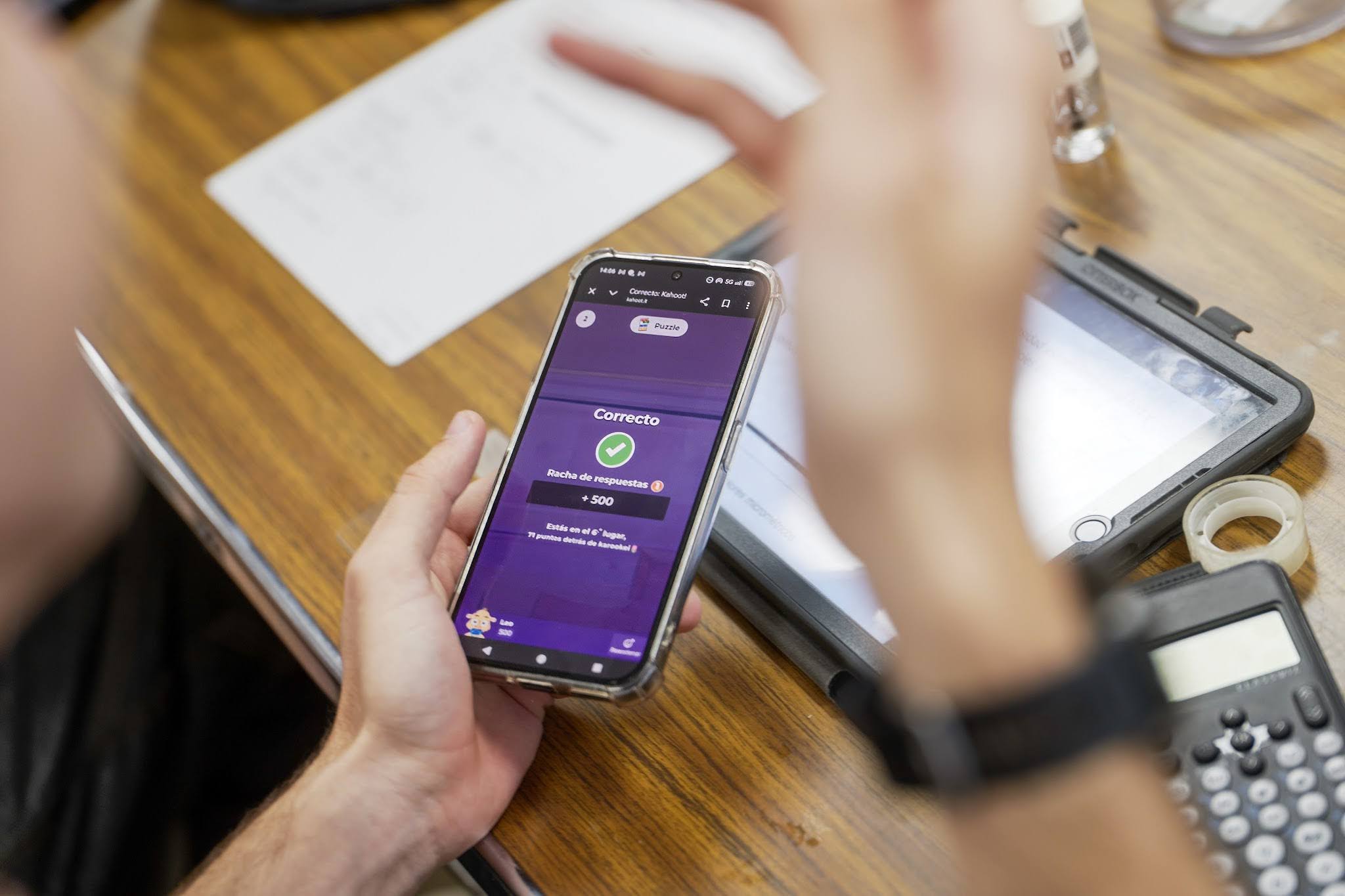
Routines shape learning more than one-off lessons
Classroom routines are key to building a learning environment. What happens in one lesson matters less than what happens across many lessons over time. The start of a new school year is a natural moment to review our habits and routines and make sure they fit the students we have in our classrooms this year.
Sometimes we adopt a routine that simply does not work for our students. In other cases, it is too big a change to keep up over the long term, or it takes too long to adjust, so by the time you see if it’s working or not, the year is already spent.
A micro-experiment shrinks that change to something you can actually start and finish. It is small enough that you will see it through, and specific enough that the result means something. If the change helps, you keep going with confidence. If it does not, you have lost a few weeks, not a year.
This series works through one micro-experiment at a time, starting here with formative assessment.
Weekly checks kept students and instructors on course
Kahoot! has been the subject of over 300 independent, peer-reviewed studies from more than 50 countries. This means that there are hundreds of experiments done and documented in a variety of global classrooms.
In this first micro-experiment, we are looking to Spain, where a five-year study published in Education and Information Technologies followed more than 1,000 engineering students who opened each class with a short kahoot on the previous week’s material. It found a relation between how many kahoot questions students answered over time and their final exam results: the students who took part consistently did better.
That link between a weekly formative check and stronger results is not a one-off finding either. A 2025 meta-analysis of 43 experimental studies found that using Kahoot! this way had one of the strongest effects the analysis measured on retention. It’s confirming what many educators already know: reviewing the material regularly beats reviewing it all at once.
To see whether the same idea works in your school, in your style, and with your students, you do not need five years or a thousand students. You need one micro-experiment, your students, and four weeks.
The experiment: a weekly formative check for four weeks
Here is what this micro-experiment looks like in practice:
- The prediction. “A short weekly quiz on last week’s material might help my students hold on to more of it, and show me what has not landed.”
- The tiny action. Once a week, open class with a five-minute kahoot of three to five questions drawn from the previous week. Keep it low-stakes: this is a check, not a test. To keep prep light, pull questions from last week’s slides or notes, or use the AI question generator to draft questions from a PDF you already teach from. Then, edit them so they target the core concepts and ideas you care about.
- The window. Continue the short weekly quizzes for four weeks. Long enough to become a rhythm, short enough that you will actually finish it.
- The results. Pick your signal of success before you start, and read it through two separate lenses. Did it help the students learn? This includes your read of the room, the question-level results in your reports, and a short retrieval check in week four. Secondly, does it feel worth it? Ask your students in a low-stakes way (a survey, a sticky-note wall, or a quick anonymous kahoot) whether the weekly quizzes helped them study. Keep the two lenses apart. Students enjoying an activity is worth something on its own, but it is not the same as learning, and you can be upfront with them about which one you are asking about.
- The decision. At the end of four weeks, you do one of three things: keep the short weekly quizzes, change one thing about the routine and run the micro-experiment again, or drop it and test something else. All three are a win, because now you are making a decision based on the data you gathered from your classroom. Over time, this process will help you find the routines that work best for you and your students, leading to more effective teaching and stronger learning outcomes.
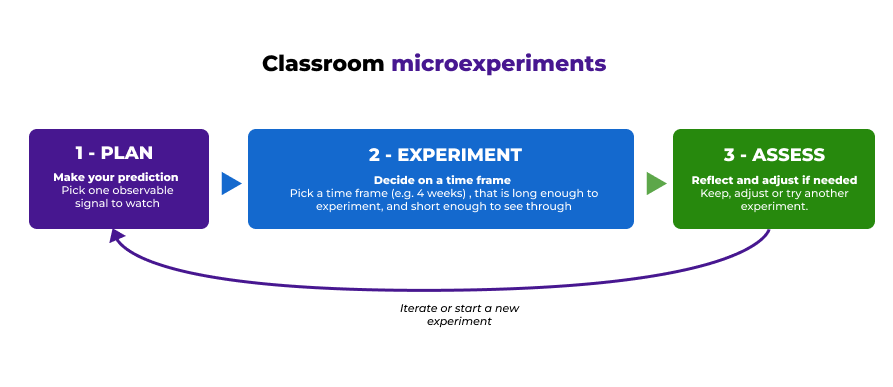
Classroom micro-experiments allow teachers to try out new methods, activities, or tools and get results to guide their next steps.
Micro-experiments improve learning with intention
Many teachers already run experiments like this all the time. You try something, get a feel for whether it works, and adjust. A micro-experiment changes one thing: it makes that intention explicit. You name the prediction (the goal you think you could reach), you set the time window, and you decide in advance how you will measure the outcome. Your gut still counts, and it is often right. But writing the goal down turns a vague sense of “this seems to help” into something you can confirm, show a colleague, or decide to continue or drop on purpose. That is what makes the result something you can trust.
So instead of getting overwhelmed by all the methods, tools, and activities you could adopt this school year, pick one small thing, run it for four weeks, watch one signal you chose as important, and let your students show you what to do next. You can even take on the micro-experiment as a classroom: tell your students this is something you will try together, and ask them to pay attention to the goal you have set for the experiment. Did they feel their learning improved, for example?
You do not need to lock anything in for the entire school year. Run one small test instead. That is a micro-experiment, and it is a far easier promise to keep.
Want to try this one? You can build your first weekly check in a few minutes, and the AI question generator will create the first draft for you. Start a kahoot and see what your students tell you.
This is the first post in a Back to School series on classroom micro-experiments. Next: what if, this school year, your students created the kahoots? In part 2 of the series, we are experimenting with giving students more agency in creating the review content.