

Key takeaways
- A 2026 study compared the same wellness curriculum for US medical and dental students delivered two ways: as lectures in 2023, and as Kahoot!-based interactive sessions in 2024, each totaling four hours of instruction.
- Across 232 matched students, self-efficacy and psychological quality of life rose significantly in both formats, and the study’s authors describe the two formats “comparably efficacious.”
- Kahoot!-based lectures were reported to be more popular and engaging, with students mentioning the games and interactivity specifically.
In higher education, delivering an effective lecture can be a challenge. Long courses run the risk of becoming little more than a run-through of slides, and healthcare programs face this problem more than most: other research cited in this study points to declining lecture attendance as medical students increasingly experience traditional formats as disengaging.
Argus-Calvo et al. (2026), published in Medical Science Educator, frame part of the challenge as generational. Today’s healthcare students are largely Generation Z, born between 1997 and 2012. The authors describe Gen Z as a group of habitual multitaskers, a habit that can raise cognitive load, weaken memory retention, and make it harder to stay engaged with dense material like medical training. Game-based formats, the authors argue, work against that pattern: they sharpen focus, build motivation, encourage active participation, and keep students connected to their peers, while giving them instant feedback on how they are doing.
That combination of real-time feedback, peer interaction, and interpersonal skill-building is exactly what the researchers wanted to test, applied specifically to wellness education rather than clinical content. Wellness training plays a key role in addressing the high rates of burnout, depression, and anxiety documented among healthcare students and professionals, yet it tends to get less attention than the clinical curriculum built around it. The stakes reach beyond the individual student: burnout and poor mental health among healthcare trainees have been linked to worse professional performance and patient care down the line.
The same curriculum, taught two different ways
Both cohorts went through the same wellness workshop, called Well-Teach, taught by the same two instructors and built on identical theoretical content, practical exercises, and experiential activities. The only difference was the approach to engagement and interactivity.
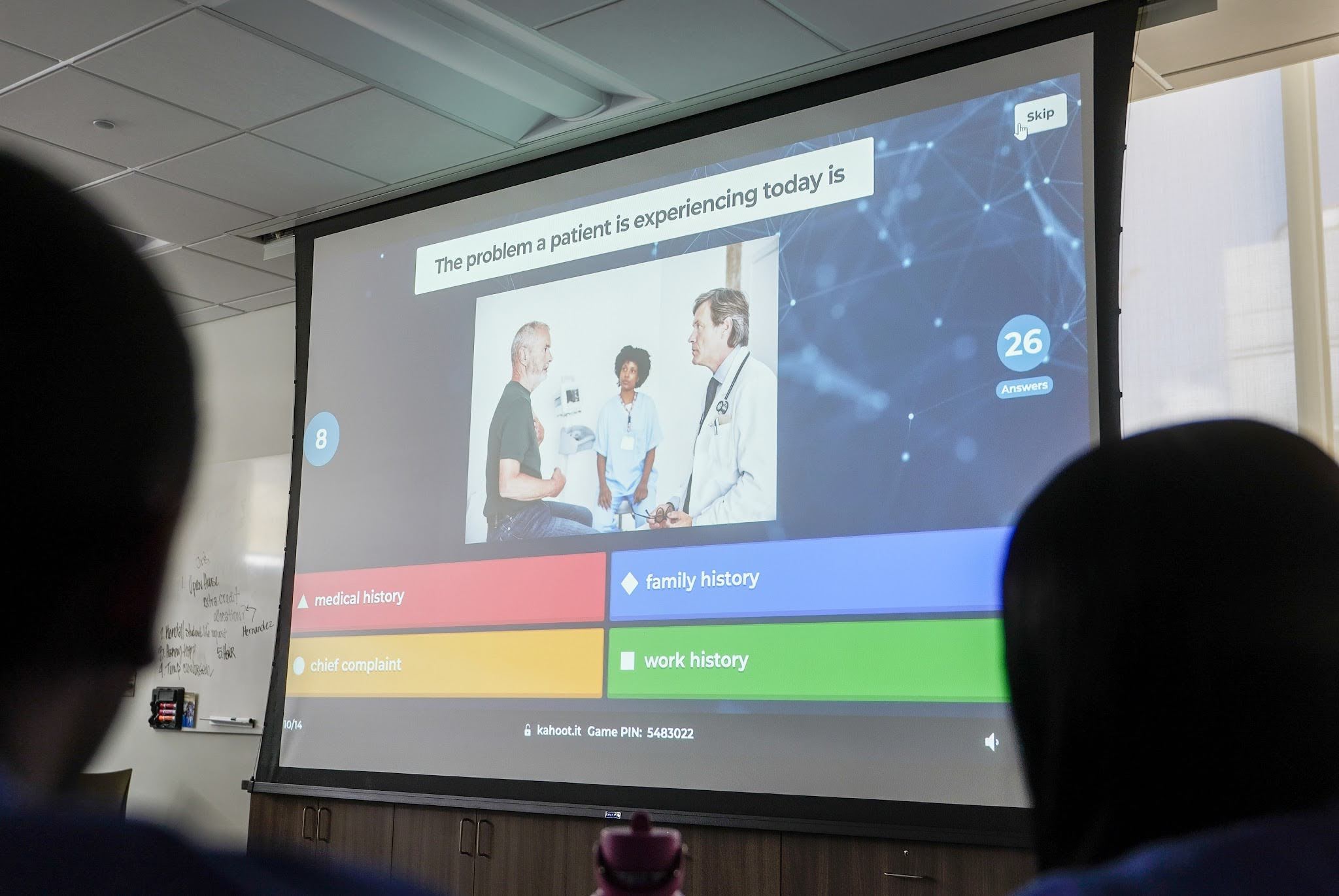
The 2023 cohort went through two 2-hour sessions built around slides and lecture delivery. The workshop also included practical exercises, case studies, group discussions, and one-on-one feedback from instructors to keep participation up. The 2024 cohort covered the same slides a year later, split instead into four 1-hour sessions, with interactive Kahoot! questions woven throughout. Students answered on their own devices, with the group’s results shown back to them in real time.
In total, 437 students took part across both cohorts, split almost evenly between them (216 in 2023, 221 in 2024, spanning both medical and dental students). Since the two cohorts were assessed a year apart rather than randomly assigned side by side, the results are best read as a strong single data point rather than a controlled head-to-head trial.
The game-based learning and traditional formats produced comparable results in efficacy
Students in both groups reported positive effects on emotional health, stress management, anger management, and overall wellness. Self-efficacy improved significantly in both groups: from 20.36 to 21.82 with lectures and from 20.32 to 21.98 with Kahoot!. Psychological quality of life also rose significantly in both formats: from 13.74 to 14.34 with lectures and from 14.20 to 15.04 with Kahoot!, alongside improvements across other quality-of-life and emotional intelligence measures.
The game-based learning format showed marginally elevated mean changes in several metrics. More participants also reported improvements in emotional health, stress management, anger management, and overall wellness compared with the traditional format. However, the disparities were not statistically significant, suggesting that both formats were comparably efficacious rather than one outperforming the other.
Students reported greater engagement with the game-based learning format
The two formats performed comparably on the outcomes measured, but not on the experience itself. When researchers analyzed open-ended feedback from both cohorts, “engagement and interactivity” was the most frequently mentioned theme overall (85 mentions), pointing to the Kahoot! sessions specifically as well as the group discussions built into both formats. A related theme, a sense of community from sharing the sessions with classmates, came up 25 times. One student gave feedback on the workshop: “The Kahoot! games. I learned a lot and was motivated to play because I liked the prizes.”
The researchers described the game-based learning format specifically as the more popular and engaging model, crediting the Kahoot! sessions in particular for drawing students into active participation.
Gen Z students want more dynamic lectures, and small changes can make a big impact
Beyond their own results, the researchers point to a broader shift worth planning around: Generation Z students tend to have shorter attention spans and a stronger preference for dynamic, technology-driven formats than previous cohorts, which pushes higher education toward rethinking how a traditional lecture course is delivered.
Shortening every lecture is not always realistic, so the researchers suggest working alternative strategies into the existing format instead: opening with a thought-provoking question, breaking up long stretches with brief case studies or group discussion, and using interactive checkpoints such as gamified questions or polls to give students a real-time read on their own understanding. None of it requires rebuilding a course from scratch, just building in more chances for students to participate and check their progress along the way.
This study adds one example to a wider case for game-based learning in healthcare training, and it does not stand alone. Özdemir (2025), a meta-analysis of 43 studies, found large gains in knowledge retention and academic achievement associated with Kahoot! use across educational contexts, and Kahoot! has a growing track record specifically in medical education as well.
For higher education programs weighing whether to make a lecture course more interactive, this is an encouraging combination of findings: while traditional lectures can deliver the material, game-based learning delivers an experience that keeps students engaged, motivated, and actively participating in class.
See the full collection of independent research behind Kahoot! at kahoot.com/research.