

When elementary students walk into STEM class, they aren’t just learning how to build, design, or solve problems, they’re learning an entirely new language.
For one elementary STEM educator, the solution wasn’t adding more worksheets or memorization activities. Instead, she embedded formative assessment throughout her units, using Kahoot! to introduce key concepts, revisit over time, and measure growth as students moved from learning vocabulary to applying it in authentic engineering tasks.
Across multiple grade levels and engineering standards, the result was the same: students entered projects with greater confidence, stronger content knowledge, and a shared language for problem-solving. Read on to learn how Kahoot! Ambassador and STEM teacher used formative assessment and game-based learning to reinforce engineering vocabulary, monitor growth, and support hands-on learning.
Starting with vocabulary, not rote memorization
In STEM, vocabulary isn’t an isolated skill, it’s a tool students need to think like engineers.
In Ms. Lainez’s classroom, first graders are introduced to the engineering techniques and design skills they’ll use throughout future STEM lessons at the beginning of a school year. Many students, however, have difficulty remembering the names of these techniques or understanding when to apply them.
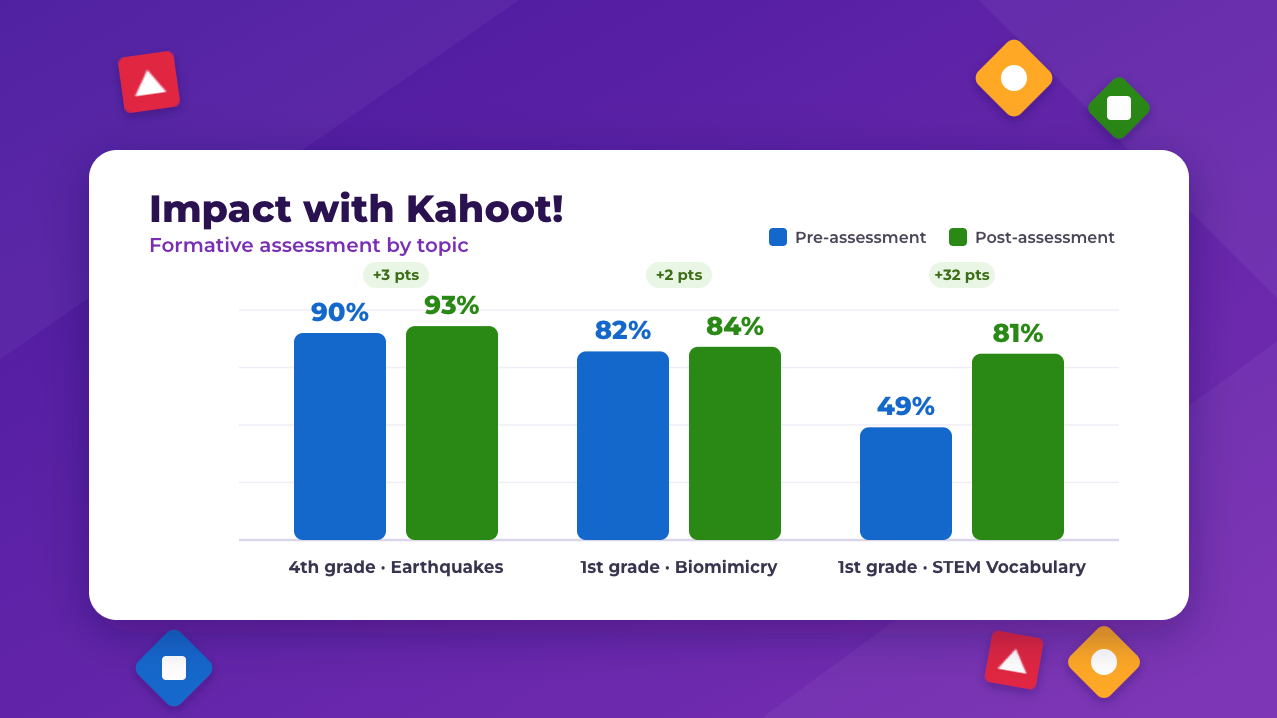
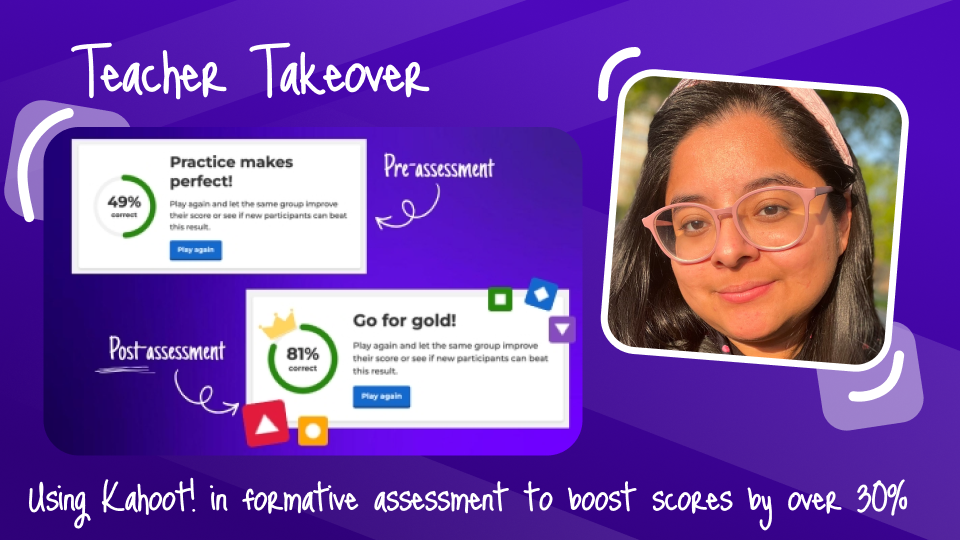
To help combat confusion and overwhelm navigating new vocabulary, Ms. Lainez created a kahoot that served as both a pre-assessment and an engaging introduction to foundational STEM concepts. Students explored vocabulary and engineering techniques they would rely on throughout the year, like materials, mechanisms for construction, and even force and motion theories. The pre-assessment confirmed what Ms. Lainez suspected: many students were still developing their understanding of both STEM vocabulary and foundational engineering practices. The class averaged 49%, providing a clear starting point for instruction.
Over the next three weeks, students participated in explicit teacher modeling, guided practice, STEM centers, student demonstrations, and hands-on engineering challenges. While the content and curriculum paced through an entire unit and changed each day, one key element stayed consistent. Kahoot! was the main instructional tool and delivery format. While students practiced hands-on learning by manipulating cardboard, tearing tape by hand, and constructing movable mechanisms, the content-based curriculum focused consistently on applying the vocabulary introduced during the original kahoot.
When students completed the assessment again, the class average had increased to 81%.
The improvement wasn’t just reflected in the data. Ms. Lainez explained that, “students were more confidently using engineering terminology to explain design decisions, discuss materials, and communicate their thinking throughout the engineering process.” Where did this confidence come from? The repeated exposure, review, and remediation native to the Kahoot! learning experience. Learning and assessment were presented via a Treasure Trove game experience, a flipped-classroom, and student-centered instructional approach within Kahoot!. By launching lessons via Treasure Trove in Kahoot!, Ms. Lainez’s students engaged with the material at their own pace, in a progression and sequence unique to their learning, assessment, and comprehension. And after weeks of review and learning, Kahoot! made all the difference.