


According to the World Economic Forum, resilience, flexibility, and agility are among the most in-demand core skills in the workplace today. What do these skills have in common? In addition to being prime examples of soft skills, these are the skills of a lifelong learner, with the confidence to continuously try new things, expand their knowledge, and innovate.
Setting up early-career professionals for success in these areas is essential, especially as many organizations look to transform work with AI and other emerging technologies. The technical skills employees need will likely change significantly in the coming years. Forward-thinking leaders know that for a company to stay competitive, employees must be equipped with the core skills to pivot with these evolving needs.
However, just 18% of company leaders in the US say they believe entry-level workers are very or completely prepared for their roles, with the majority citing a lack of soft skills. This isn’t only the opinion of leaders either. Just 39% of Gen Z report feeling fully prepared for their job role, falling 20 points from the year prior.
Underlining this, over two-thirds of Gen Z employees now admit to feeling out of their depth at work, highlighting not only a lack of key skills but of confidence and a sense of support. To fill the gap, many are relying on AI: 59% say they have used AI to complete work tasks due to feeling undertrained. There is just one problem: soft skills – skills of mindset and human interaction – can’t be automated by AI.
To equip Gen Z employees to deliver strong performance now and in the years ahead, workforce leaders should refocus their approach to learning and development to feature three strategic pillars:
Harness AI to improve learning and creativity
While AI isn’t a substitute for core skills, it can be a valuable tool in employees’ learning and skill development when used in a thoughtful way. Currently, many are using AI to offload analytical or creative thinking tasks, which research has shown may diminish critical thinking and problem solving skills. Boosting efficiency with AI should create more space for human creativity, not replace it.
Instead, utilize AI in training to prompt employees with questions and discussion starters, rather than giving them the answers. This helps trainers save time on creating engaging and personalized learning experiences, while also enabling employees to flex and grow their mental muscles.

Integrate soft skills development throughout workforce training
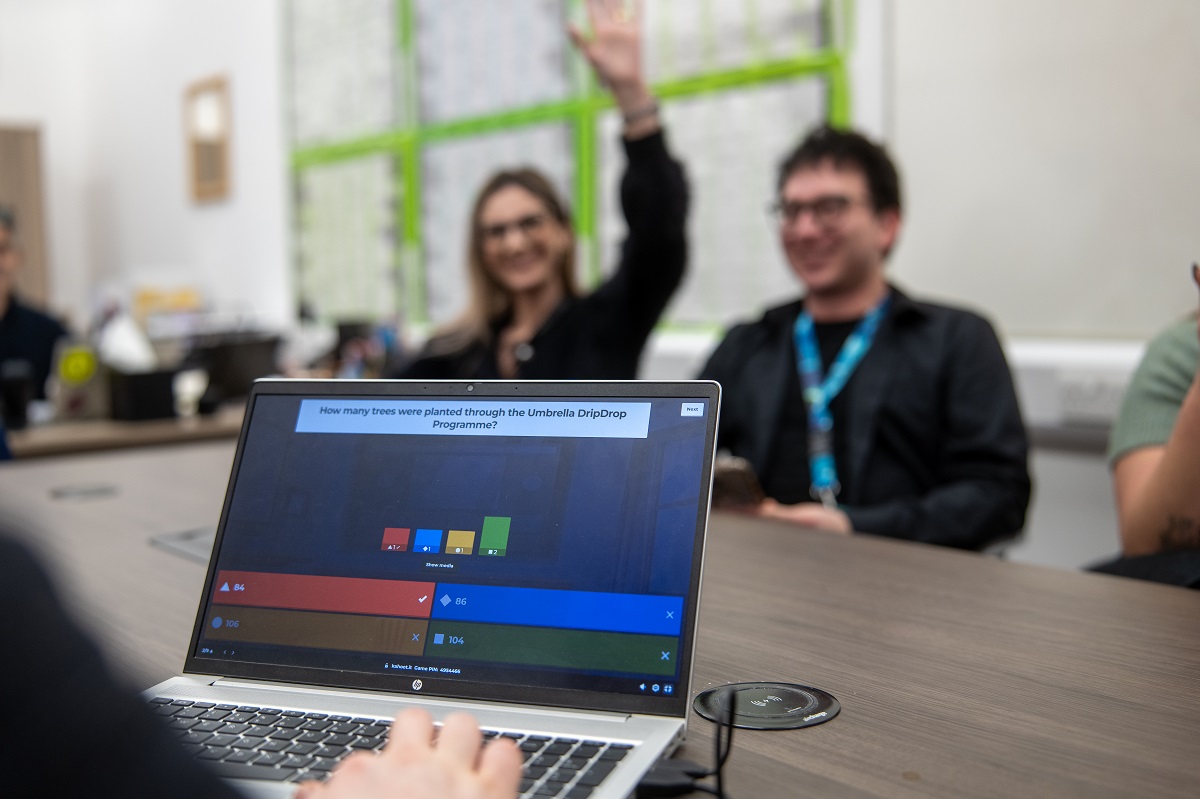
For example, team-based gamified learning challenges – a popular learning methodology among Gen Z – help employees foster skills like collaboration, communication, and problem solving. Interactive learning with digital tools can also offer instant, real-time feedback. Research from Gallup and Workhuman suggests regular feedback is a key ingredient for engagement and talent retention, as it gives employees clear guidance on what skills to improve and where they are excelling.
Pair training and team building with peer-to-peer learning
In interactive training, employees are actively involved in the learning process. Peer-to-peer learning takes it a step farther, challenging learners to become leaders. Junior employees can gather for knowledge exchange sessions across the organization, or with department or team members of all levels.
Younger employees can also be paired with older employees as “mutual mentors.” As younger workers help their colleagues build tech skills, for example, they can benefit from older employees’ institutional knowledge, broader professional network, and deeper career experience. These relationships can help Gen Z employees feel more connected and supported, while elevating the skills of everyone participating.
Peer-led learning can also make asking questions feel less intimidating. This is especially important for younger professionals, as 55% of Gen Z employees say their lack of sufficient interpersonal training makes them fear asking, “dumb questions.” When Gen Z workers have the space to comfortably ask questions, they can not only avoid potentially damaging miscommunication and mistakes; they can also build more confidence speaking up, expressing their thoughts, and offering new ideas and insights.
In less than 10 years, Gen Z is expected to be the largest generation in the workforce. For organizations to succeed, failing to invest in Gen Z employees’ development is not an option. The future of work calls for all professionals to be lifelong learners. With a thoughtfully designed learning strategy, organizations can help Gen Z employees build the foundational skills they need to contribute their best work now and for years to come.
Get started upskilling your Gen Z employees and beyond with Kahoot! 360, the ultimate workforce engagement platform.
This blog post is based on an article originally published in HR Tech Cube.