app store badge google play badge

Get the mobile app for the best Kahoot! experience!

How Brunswick School Department boosts active learning with Kahoot! EDU

Brunswick’s teachers chose Kahoot! EDU with one requirement: it had to work from kindergarten through 12th grade. Three years later, it supports self-paced learning in elementary school and live lessons in junior high. In one high school class, scores typically grow from 40% to 85% over a unit. The district also runs its mandatory staff training on it.

Location: Maine, USA
Key takeaways:
Teacher-led adoption. Teachers set the selection criteria and voted for the platform themselves, so buy-in was built from day one.
One platform for K-12. A single tool serves every grade, from kindergarten through 12th grade, which was a non-negotiable criteria.
Whole class growth you can see. In 9th grade classes, scores typically grow from 40% on the pre-assessment to 80-85% by the end of the unit.
Practice that extends beyond the bell. Self-paced kahoots assigned through Google Classroom help lift accuracy by about 30% by the next live game.
Access for every learner. Read Aloud supports struggling readers and students with IEPs. Open-ended questions give shy students a voice.
One platform, for staff too. The district also uses Kahoot! EDU for mandatory staff training.

Brunswick School Department’s teachers chose Kahoot! EDU, with one requirement: it had to work from kindergarten through 12th grade. Three years later, it gives district leadership what they were seeking, teacher buy-in, formative data at every grade level and measurable growth. It powers self-paced learning in elementary school, live instruction in junior high, and improved outcomes in high school, where scores typically improve 40% from pre-assessment to unit end. And the same platform delivers the district’s mandatory staff training.

The logo of Brunswick School Department. Is a B letter in orange with a black dragon.

About Brunswick School Department: The Brunswick School Department is a K-12 public school district in Brunswick, Maine, serving 2400 students across its 4 schools, including Harriet Beecher Stowe Elementary School, Brunswick Junior High School, and Brunswick High School. The Brunswick School Department’s vision is to prepare students for a technology-shaped world. Across grade levels, from teaching early civilizations in high school social studies to digital literacy in middle school, teachers face the same challenges: keeping students engaged and improving learning outcomes.
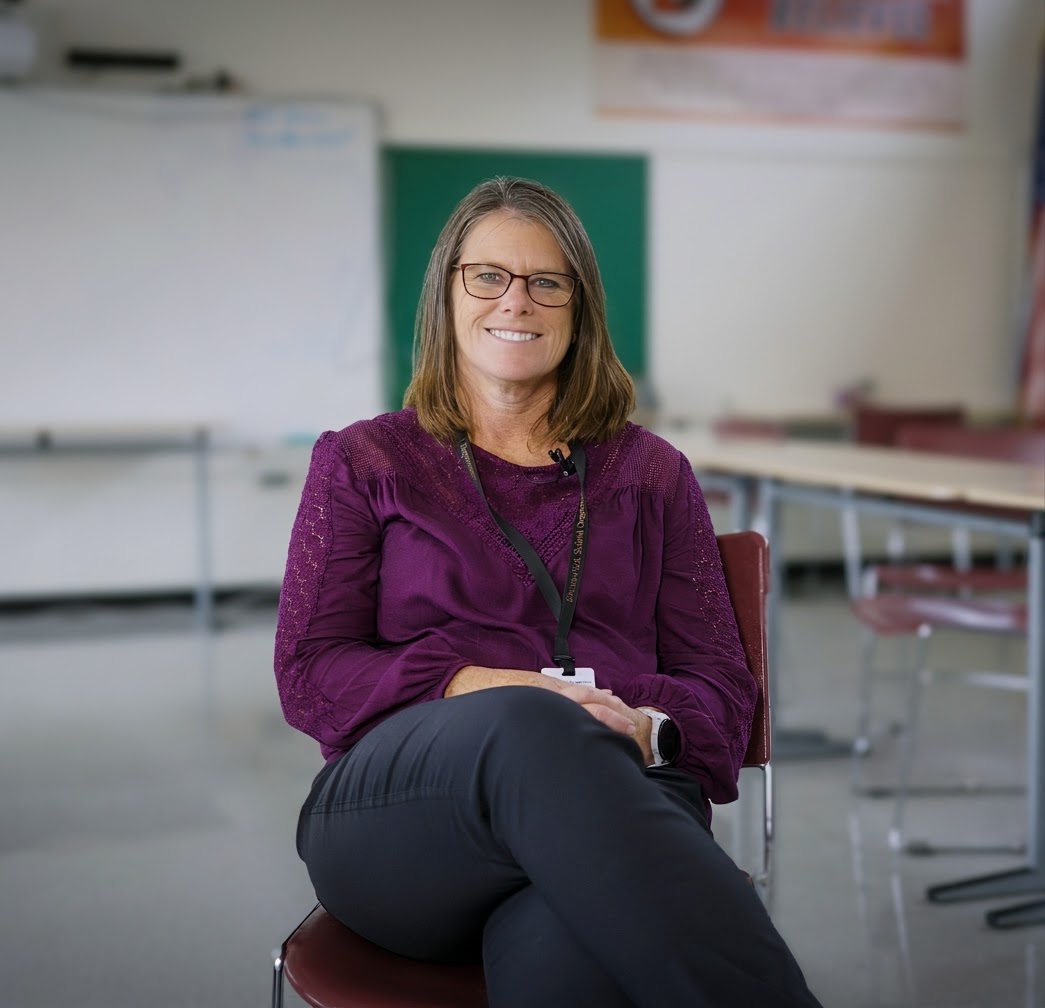
Profile picture of Tricia Faulkingham sitting in a classroom
Tricia Faulkingham
Director of Educational Technology at Brunswick School Department

Tricia has worked in Brunswick for seven years. She manages the district’s edtech tools and connects teachers and staff with the companies that make them.

“Teachers are the ones using these tools in the classroom, so their input had to be part of the decision”.

Tricia Faulkingham, Director of Educational Technology at Brunswick School Department

For Tricia, a district-wide rollout had to start with the tools teachers already found effective. Three years ago, she invited teachers to help choose the district’s instructional software. Together, they developed the criteria, including one non-negotiable: the platform had to work for students from kindergarten through 12th grade.

After a demo day with several providers and working within a fixed budget, the teachers selected Kahoot! EDU as the district’s interactive learning platform. Since adoption, the district has integrated Kahoot! into learning across all grade levels. 

A student is learning with Kahoot! in the classroom on an iPad device.

Brunswick School Department also uses Kahoot! EDU for mandatory professional development and staff training. Read the story here

Elementary school: independent learning, with regular check-ins

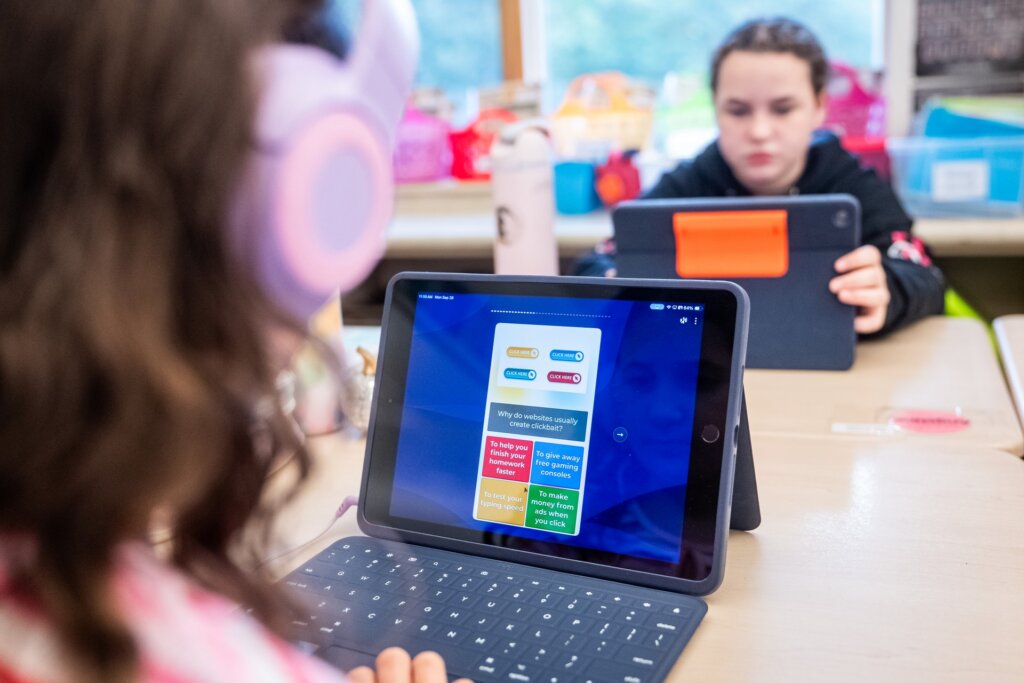
At Harriet Beecher Stowe Elementary School, Janice Rodríguez teaches technology to students in grades 3 to 5 (ages 8 to 11), covering digital citizenship and internet safety. In her 20 years of teaching, she has seen students’ attention become much harder to hold. Sitting through a whole-class lesson as passive listeners no longer works. 

To make the work, she splits the class. A small group discusses the day’s topic with her, such as clickbait or online safety. The other students work through self-paced kahoots independently: short learning slides followed by questions that check their understanding.

“They want to be autonomous, and I want to be able to allow them to be autonomous, but I also check in to make sure that they understand what it is we’re learning. So Kahoot! gives me that flexibility to do both”.

Janice Rodríguez, Technology Integrator at Harriet Beecher Stowe Elementary School

Every student gets a voice

In addition, features like Read Aloud let students who struggle with reading or vocabulary listen to the questions as many times as they need, supporting students with individualized education plans (IEPs). Kahoot!’s open-ended questions give quieter students a way to share their voice.

One student is looking into her iPad while learning with Kahoot! She's using headphones and using Read Aloud in the platform to listen to the content on the Kahoot!

“A lot of these students might be shy and might not want to speak up in front of their whole class, or even in a small group. But in a Kahoot, I’ll post an open-ended question, and I do get responses. So it is their way of being able to share too”.

Janice Rodríguez

At the end of each class, the report shows her how the whole group progressed and which questions need revisiting.

“They’re engaged, they’re ready to learn, and I can see it. The proof is there in their report”.

Janice Rodríguez

Junior high: high engagement during live instruction

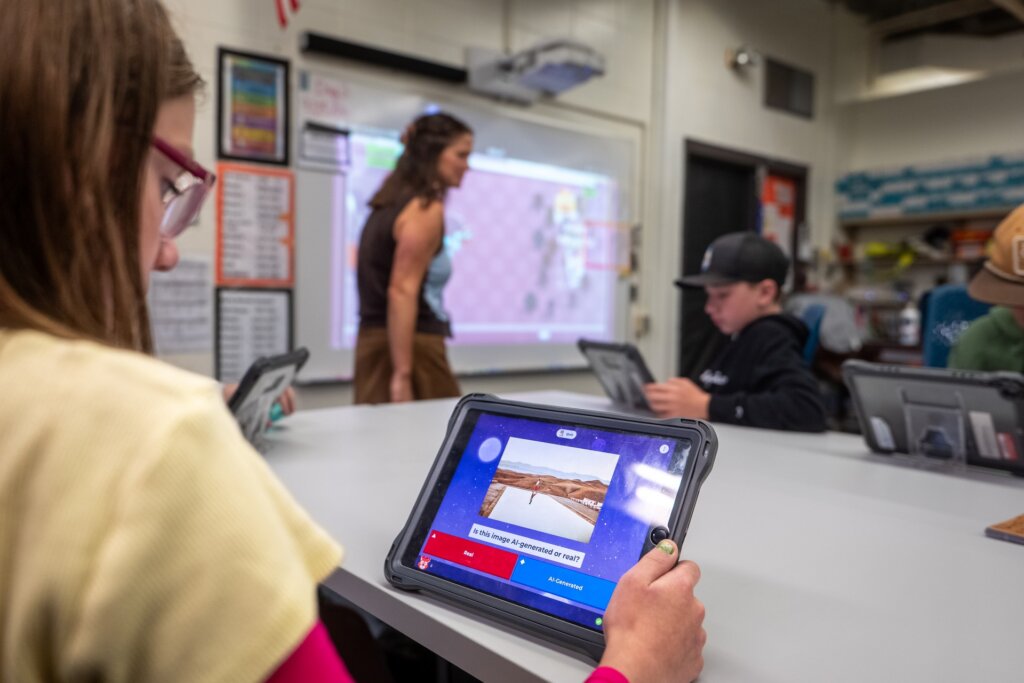
At Brunswick Junior High School, Michelle Russo teaches sixth grade digital literacy (ages 11 to 12), from digital citizenship and artificial intelligence to coding and robotics. The goal is practical: students should be able to judge what they see online and tell real content from AI-generated content on their own. The hard part is holding their attention when so much else competes for it.

That’s why Michelle uses Kahoot! EDU to bring energy into live lessons. Game-based learning gets her students discussing the topic, and they remember more than they do with traditional activities.

“Using Kahoot! is especially important during live instruction. Students listen and stay engaged because they want to answer the questions correctly”. 

Michelle Russo, Digital Literacy Teacher and Technology Integrator at Brunswick Junior High School

After every kahoot, Michelle checks the reports to see which questions students found hardest and uses that to plan where the next lesson starts. If a question trips students up during class, they talk it through on the spot to clear up the misconception before moving on.

High school: from 40% to 85% improvement over a single unit

At Brunswick High School, Bender Caiola teaches ninth-grade world studies. He opens each new unit with a Kahoot that serves as a pre-assessment. It introduces new vocabulary and concepts and shows what students already know. Those first scores are usually low, as expected. 

As the class works through lessons, readings and practice, he brings Kahoot! back with different question types and game modes to track their progress until both he and his students feel ready for the unit quiz.

“The more students practice with Kahoot!, the more they improve. That initial 40% of knowledge typically rises to 60% right away. After that, it’s almost like exponential growth. By the time we do it a fourth time, usually the students are at 80 to 85%, and that’s the whole class”. 

Bender Caiola, 9th Grade World Studies at Brunswick High School

Self-paced practice drives learning outcomes

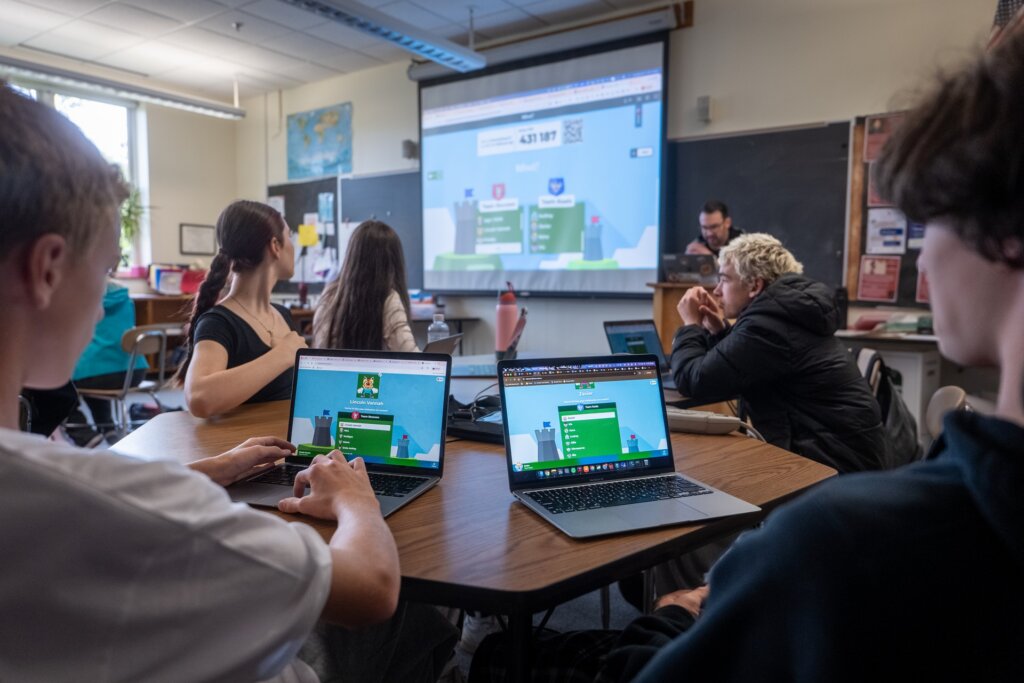
Beyond the classroom, Bender posts practice kahoots through the Kahoot! add-on in Google Classroom, so students can repeat them as many times as they want, at their own pace.

“I can tell when kids have been practicing the kahoots at home, because there’s a direct correlation between practice and how they do in live mode in class, where they crush it. I can see their scores increase from 40% accuracy up to 70 or 75% from the previous lesson”.

Bender Caiola

9th grade students have their computers at their desks and they are learning with Kahoot! with the teacher in front of the classroom.

“Most of my studying at home has been on Kahoot!, because it’s really helpful, especially because it helps you practice active recall”.

9th grade student at Brunswick High School

Using AI to push past memorization

As students improve, Bender uses the Kahoot! AI Assistant to make questions harder, for example by switching to advanced question types. This challenges students’ critical thinking and conceptual depth.

One platform, district-wide value

Three years after Brunswick’s teachers voted for it, Kahoot! EDU now supports teaching and learning across the district. Each teacher uses it differently, but the goal is the same: turn passive participation into active learning and improve outcomes for every student. 

The value doesn’t stop at the classroom door. The Brunswick School Department also uses Kahoot! EDU to deliver mandatory training to its roughly 500 employees, from bus drivers to central office staff, and reached about 98% completion in the first year. Read the staff training story here.

Do you have a Kahoot! success story you’d like to share? Reach out to us via LinkedIn, Instagram, Facebook, X, TikTok, or send us an email at press@kahoot.com. Want to give your teachers the same tools Brunswick uses to close learning gaps, from live and self-paced kahoots to reports and staff training? Email us at getedu@kahoot.com or explore what you can do with Kahoot! EDU.