


Key takeaways
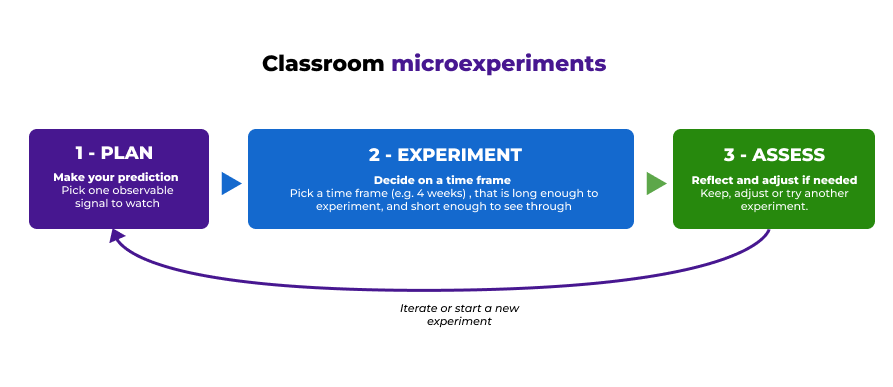
- A classroom micro-experiment is one tiny action, run for a short, fixed window of time, with one signal you agree to watch before you start.
- Make data-driven choices about what works for your students: test and iterate on new routines or tools before deciding whether to keep them.
- Team play works because it forces a short negotiation before every answer: students have to say what they think, justify it to a teammate, and defend or revise it if someone disagrees.
A classroom micro-experiment is a small action, run for a short, fixed window of time, with a specific goal. Instead of committing to a whole new routine, struggling to fit it into a busy weekly schedule, and quietly dropping it later, you commit to running a short test, reading the results, and deciding what to do next. At the end, you should be able to confidently choose whether to keep the new routine, iterate on it and test again, or try a different experiment altogether. Classroom micro-experiments let teachers try out new methods, activities, or tools, and get quick results to guide their next steps.
In part 1 of this series, we tested a weekly formative check. In part 2, we handed the creation of the review questions to the students. This time, we change how students work while reviewing content: alone or in small groups.
A small group must discuss before they answer
In individual review, whether gamified or on paper, a student either knows the answer or they do not. Whether that understanding is only surface-level, or deep enough to explain in their own words, is not always clear from the answer alone.
Having students explain their thinking, justify it, and reason out loud reveals the real depth of their understanding. But that is hard to do in a whole-class setting: some students get nervous speaking in front of the whole class, and there is often simply not enough time to hear everyone’s thoughts.
This is why small groups help: students have more chances to speak, interact, think out loud, brainstorm, justify, and even debate. When teammates disagree, someone has to make a case for their answer, and the others have to agree or push back. Explaining their thinking out loud also requires students to review their own thoughts and understanding and sharpen it on the spot. A student who did not know the answer gets to hear a teammate explain it in their own words, which can land better than the same idea from a textbook or a teacher.
Adding small group work to your weekly review is easy: just reframe it as a friendly, team-based competition. Keep it to 10 to 15 minutes, long enough for a real discussion and short enough to hold everyone’s focus. As a formative check, you still get a read on how each team understood the material, and just as importantly, students get to share what they know and play together.
The experiment: team play instead of solo, for four weeks
Here is what this micro-experiment looks like in practice:
- The prediction. “If my students play the weekly review kahoot in teams instead of solo, they will have to talk through their reasoning before answering, and I will see more of that discussion, including from students who usually stay quiet.”
- The tiny action. Keep the weekly review kahoot itself unchanged and change one setting: run it in team experience. Groups of three or four work well. Tell teams they need to agree on an answer, not just pick one, and that anyone on the team should be able to say why if asked.
- The window. Run Team experience once a week for four weeks. A month is usually enough time to tell whether it is working: whether you are seeing the kind of discussion, and the results, you set out to watch.
- The results. Pick your signal of success before you start, and read it through two separate lenses. Did it help the students learn? Listen in on a few teams each round: are they explaining, justifying, and disagreeing, or just picking whoever answers first? Notice, too, whether your quieter students are part of that back-and-forth or just going along with it. A short check-in with each team around week two catches this early. Secondly, does it feel worth it? Ask your students in a low-stakes way whether playing in a team made the review easier to take part in. Keep the two lenses separate. A team that has fun together is worth something on its own, but it is not the same as a student actually reasoning through the material, and you can be upfront with them about which one you are asking about.
- The decision. At the end of four weeks, you do one of three things: keep team play, change one thing about the format and run the micro-experiment again (smaller teams, a rule that rotates who explains the answer, or mixing quieter and louder students on purpose instead of leaving it to chance), or drop it and test something else. All three are a win, because now you are making a data-driven decision based on actual impact in your classroom, not a guess about which format would work.
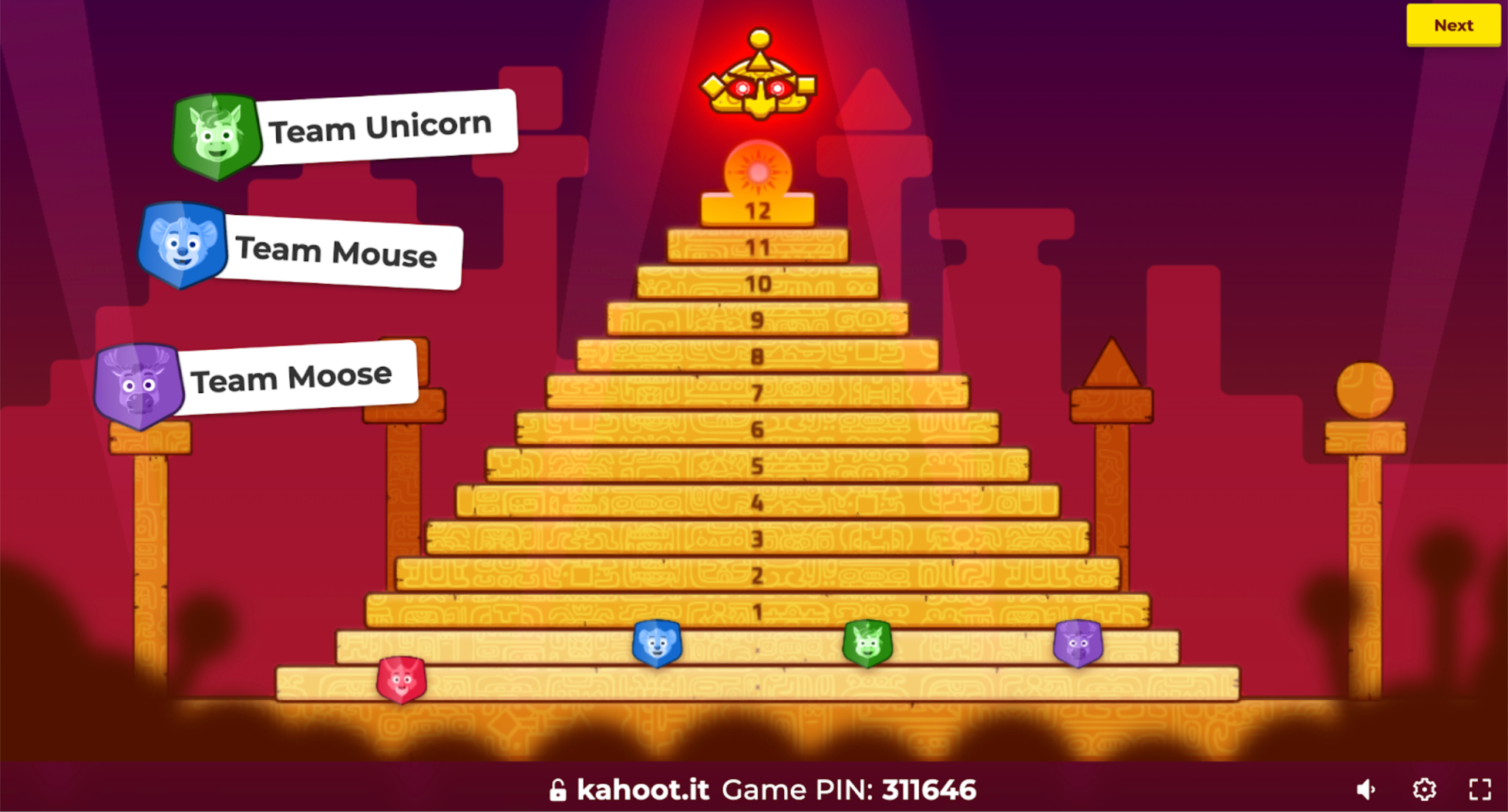
Lost Pyramid game experience allows teams to discuss, assess their confidence level and answer together.
Tips for successful team-based review kahoots
- Same teams or new teams each week? Both work. Stable teams build the trust that makes disagreeing easier over time; new teams each week spread a strong explainer’s habits around more of the class. Pick one and keep it consistent for the four weeks so you are comparing fairly.
- Pick a Kahoot! experience that fits the discussion. Every kahoot can be launched in team experience. Team Experience Classic and Lost Pyramid both build in time to discuss before answering. Or give each group a single device and run Accuracy experience with the timer off. Only correct answers score points, so no one has to rush, and the team can take the time it needs to discuss.
- Give teams roles. A captain locks in the final answer, which matters most when a team shares just one device, and a timekeeper watches the clock. Both keep the negotiation focused, and give a quieter student a defined way to take part.
- Write questions that need reasoning, not recall. A one-fact question will not spark much discussion. Build in questions where a team has to compare options or work through a step, since that is where the disagreement, and the explaining, actually happens.
- Hand out paper and pen when it helps. If a question involves a calculation or a multi-step process, let teams work it out on paper before they answer. It gives the discussion something concrete to point to.
Defining clear goals for peer discussion
Decide in advance what you expect the discussion to do, and watch whether the micro-experiment produces it. Setting clear expectations for team play, and for how you want students to behave in it, helps them succeed at the group work itself.
The shift from solo to team play also asks more of students. Instead of just answering, they have to weigh in on their team’s thinking and justify their own, a bigger cognitive lift than playing alone.
Want to try this one? Any kahoot can be played in team experience. Start a kahoot and switch it to team play before your next weekly review.
This is part 3 in a Back to School series on classroom micro-experiments. Next: what if the review happened before class even started? In part 4, we test a short kahoot before the lesson and see what it makes room for in class time.