


Key takeaways
- Pre-service teachers who experience game-based learning show significant improvements in academic achievement and digital pedagogical competence.
- Research from China, Ukraine, Indonesia, Ecuador, and the Philippines shows that future educators develop stronger teaching skills when they learn through the same tools they’ll use in their own classrooms.
- Knowing about a tool isn’t the same as knowing how to use it. Hands-on experience builds the confidence teachers need to integrate technology effectively..
- The majority of pre-service teachers who learn with Kahoot! express strong intentions to use it in their future teaching, extending the impact far beyond a single classroom..
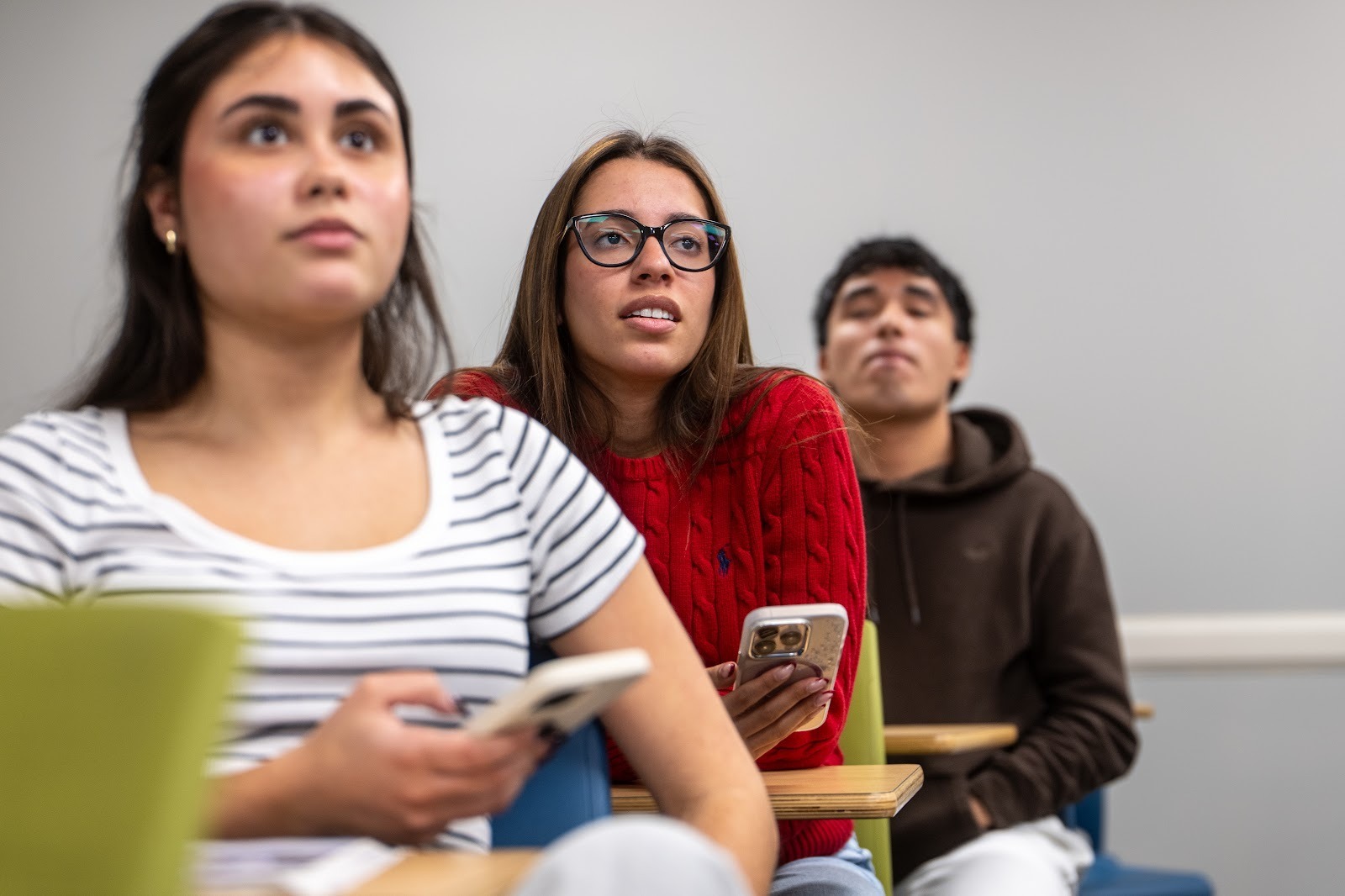
We talk a lot about the ‘ripple effect’ in education, but for pre-service teachers, it’s literal. Every strategy they pick up in their own training is one they’ll actually use to reach students five or ten years down the road. Because of this connection, getting the tech right during teacher training is key.
This is why recent research on game-based learning in teacher preparation programs deserves special attention. When pre-service teachers experience effective, engaging pedagogy firsthand, they don’t just learn content. They internalize a model for how learning can feel. Increasingly, research suggests they carry that model forward into their own classrooms.
Pre-service teachers using Kahoot! show significant academic gains
A study published in Innovations in Education and Teaching International examined what happens when pre-service teachers in China experience Kahoot! as students in a Modern Educational Technology course. Researcher Yue Hu at Hangzhou Normal University followed 40 pre-service teachers through a six-week implementation.
The results were clear. Pre-service teachers showed statistically significant improvement in academic achievement, with average test scores rising by nearly 20%.
When asked about their experience, pre-service teachers rated Kahoot! highly across every dimension measured: entertainment (4.60 out of 5), engagement (4.34), perceived learning effect (4.51), and the intention to use Kahoot! in their own future teaching (4.48).
One pre-service teacher captured the learning benefit simply: “Kahoot! helps me to know what the main points from the lectures are.” Another noted: “Using this educational tool helps to deepen our impression and understanding of knowledge.“
Perhaps the most significant finding, however, wasn’t about their current learning; it was about their future teaching. The vast majority of participants indicated they intend to use Kahoot! in their own courses, recommend it to colleagues and hope other instructors will adopt it.
Game-based learning builds the digital skills future teachers need
In Ukraine, researchers took a different angle on the same question. A study published in the International Electronic Journal of Elementary Education examined whether using Kahoot! could help pre-service primary school teachers develop the digital competencies they’ll need in modern classrooms.
The experiment followed 115 third-year teacher candidates, comparing an experimental group using Kahoot!-integrated instruction against a control group receiving traditional methods. The researchers measured digital competence across four dimensions: cognitive-procedural skills, value-motivational attitudes, reflective-actionable capabilities, and personal development.
The results showed significant improvement across all four dimensions in the experimental group. Pre-service teachers didn’t just become more comfortable with the technology; they also developed a deeper understanding of how to integrate digital tools into effective pedagogy.
Being confident with digital tools and knowing how to use them effectively in learning is important, because today’s pre-service teachers will be teaching students who have never known a world without smartphones. The question isn’t whether technology will be in their classrooms; it’s whether they’ll know how to use it effectively. Learning with gamified tools appears to build exactly this kind of practical, transferable digital competence.
Pre-service teachers develop confidence integrating technology into teaching
A study published in Cogent Education followed 53 pre-service EFL teachers at Sunan Ampel State Islamic University as they learned to integrate gamified tools, including Kahoot!, into their teaching practice. The researchers used the TPACK framework (Technological Pedagogical Content Knowledge) to assess how well future teachers could blend technology, pedagogy, and subject matter.
The findings were encouraging. Pre-service teachers demonstrated “very good” competence in both lesson planning and teaching practice when integrating gamified assessment tools. More importantly, they developed confidence in using these tools not as gimmicks, but as genuine pedagogical strategies.
As the researchers noted, the COVID-19 pandemic didn’t just force digitalization into education. It revealed that pre-service teachers could rapidly develop sophisticated digital pedagogical skills when given the right support and tools.
Teachers need hands-on experience
Knowing about a tool is not the same as knowing how to use it. A 2024 study published in SDGs Review followed 105 in-service teachers at partner schools of Bulacan State University in the Philippines who received training on online educational applications including Kahoot!. The findings revealed a gap between awareness and practice. As one teacher admitted: “Before the training, I am already aware of the discussed tools, but I was not using them.” Another noted: “I am familiar with the word Kahoot!, but I don’t know how to use it.”
After hands-on training, the situation changed dramatically. Teachers reported gaining confidence and actually integrating the tools into their teaching. “I was able to gain confidence in using them because I learned so much from the training,” one participant explained. Another described how, “it made my teaching process easy and more convenient” and helped create “activities that could engage students in the learning process.“
The study found a significant relationship between technological skills, resource availability, and successful tool adoption: reinforcing that effective integration requires more than a lecture about educational technology. It requires experiencing it.
This finding carries a clear implication for pre-service teacher education: if experienced, practicing teachers need hands-on experience to move from awareness to confident use, then future teachers certainly do too. Talking about game-based learning isn’t enough. Teacher educators need to model it.
These findings align with global research on Kahoot!’s effectiveness
These findings among pre-service teachers align with the broader research on Kahoot!’s effectiveness. A comprehensive meta-analysis by Dr. Osman Özdemir, published in the Journal of Computer Assisted Learning and synthesizing 43 independent studies, found that Kahoot! boosts academic achievement with an effect size of 0.772. For knowledge retention, the effect size was an exceptionally large 1.492, indicating that gamified formative assessment leads to significantly higher retention rates.
What makes the pre-service teacher research particularly valuable is that it shows these benefits extend to a population that will, in turn, shape the learning experiences of future generations.
What this means for teacher education programs
For those who train future teachers, this research offers a clear message: model the pedagogy you want to see. Pre-service teachers learn not just from what we tell them about effective teaching, but from how they experience learning themselves.
Using tools like Kahoot! in teacher preparation courses serves a dual purpose. It improves immediate learning outcomes: the content pre-service teachers need to master. It also builds pedagogical competence: the practical skills and dispositions they’ll need to engage their own future students.
A single pre-service teacher who learns effective gamified pedagogy today might teach for 30 years. If they reach just 25 students per year, that’s 750 students who could benefit from more engaging, effective instruction. Multiply that by the thousands of pre-service teachers in education programs worldwide, and the potential ripple effect becomes clear.
What if teacher preparation looked different?
Most pre-service teachers today are still trained through traditional lectures: they are learning about engaging pedagogy without actually experiencing it. The research points to what’s possible when that changes.
When future teachers experience game-based learning firsthand, the effects go beyond better test scores. They develop practical digital skills, gain confidence with new tools, and form intentions to use these approaches in their own teaching.
Teacher educators have a unique chance to shape not just one classroom, but the hundreds of classrooms their graduates will lead.
Learn how Kahoot! EDU helps institutions train future teachers.