


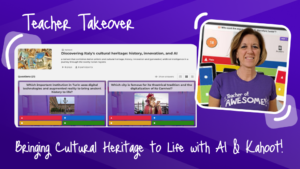
“Why does this matter to me?” If you’ve ever tried to teach cultural heritage, whether through art, history, traditions, or personal identity, you’ve probably seen it: students who want to care, but struggle to connect. Dates feel distant. Artifacts feel abstract. And “heritage” can sound more like a museum label than a lived experience. That’s where today’s digital tools—especially enhanced through Generative AI and game-based learning, like Kahoot!, can make a real difference. When used thoughtfully, they don’t replace good teaching. They amplify it. Cultural heritage + AI: opportunity, not replacement. Generative AI (GenAI) is opening new doors for how we preserve, explore, and share cultural heritage. From analyzing artworks to creating interactive learning experiences, AI can help make cultural content more accessible, engaging, and relevant to today’s learners. But let’s be clear: AI isn’t here to take over the role of the teacher.
Instead, think of it as augmented intelligence—a digital cultural mediator that supports curiosity, exploration, and reflection, while educators provide the context, judgment, and human insight that technology simply can’t replace. Of course, this comes with responsibility. Questions around authenticity, bias, transparency, and intellectual property matter—especially in cultural education. That’s why human validation and ethical use must stay at the center of AI-supported learning. Our role, as teachers, is crucially important: from content delivery to learning designer. In AI-supported classrooms, teachers don’t step back—they step into a more powerful role. Rather than focusing only on what students learn, educators guide students through how they learn. This means:
- Designing meaningful learning pathways
- Encouraging reflection and discussion
- Supporting metacognitive thinking
When students pause to ask, “Why did I choose that answer?” or “What made me feel confident?”, learning deepens.
Cultural heritage belongs in every classroom
Cultural heritage isn’t just about the past. It’s about identity, belonging, and understanding the world we live in today. When students explore cultural heritage, they:
- Learn to interpret meaning across languages and symbols
- Develop respect for diversity and multiple perspectives
- Build critical thinking and civic awareness
Culturally inclusive and responsive learning also helps address a familiar challenge in education: the skills gap. When learning feels disconnected from real life, motivation drops. Active, culturally grounded learning—especially when supported by adaptive, AI-informed tools—helps students see relevance and purpose.
Learning that sticks: active, playful, meaningful
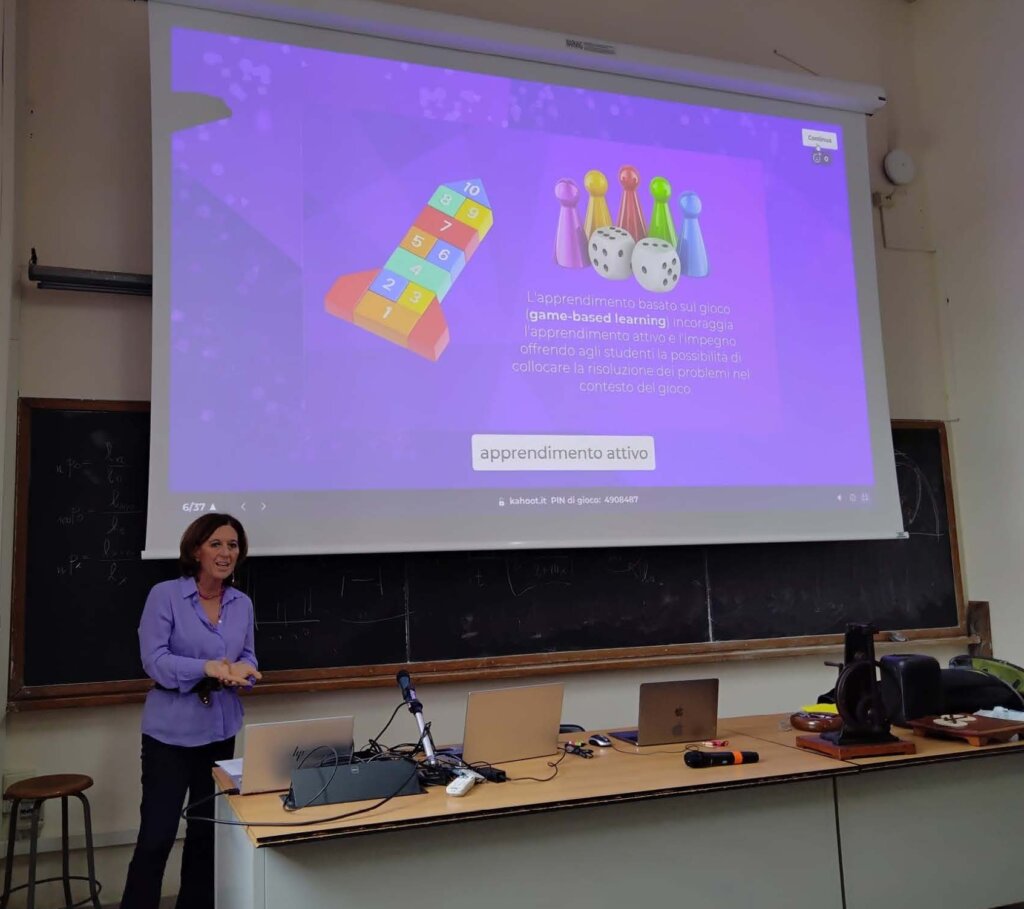
The most impactful cultural learning doesn’t happen through lectures alone, but when students do something with what they’re learning. Storytelling, role-play, simulations, labs, and playful challenges invite students to engage emotionally as well as cognitively (DigCompEdu Framework). And that’s where game-based learning shines, and where Kahoot! comes in. Gamification isn’t about turning school into a video game, but instead using play, with challenges, feedback, and rewards, to activate curiosity and intrinsic motivation. When balanced thoughtfully, it supports collaboration, problem-solving, and deeper understanding.
Why Kahoot! works so well for cultural heritage
Among digital learning tools, Kahoot! has become a favorite for a reason. Cultural content can sometimes feel distant or overly academic. Kahoot!’s playful structure helps turn that content into an interactive experience—one where curiosity leads the way.Instead of passively receiving information, students:
- Compare ideas
- Discuss answers
- Learn from one another
- Build meaning together
The power of Confidence mode
Features like Confidence mode add an extra layer of learning. After answering a question, students reflect on how confident they feel. That small pause encourages metacognition:
- Was I sure—or guessing?
- Why did I feel confident?
- What might I need to rethink?
Similarly, in cultural heritage learning, where interpretation and perspective matter, reflection is incredibly valuable. Students learn that uncertainty isn’t failure. It’s part of the learning proces
From quiz to cultural conversation
When used intentionally, Kahoot! becomes more than a quiz tool. Each question becomes a gateway to storytelling, discussion, and identity-building. Students debate perspectives, question assumptions, and encounter culture through multiple lenses. Kahoot! also supports accessibility and inclusion. Visuals, audio cues, adaptable pacing, and multimedia content make heritage learning approachable for students with different backgrounds, abilities, and interests.
#KahootTip Let’s take this example: a Kahoot! journey across Italy
This classroom lesson and example brings this approach to life: a nationwide Kahoot! experience exploring Italy’s cultural heritage across all 20 regions. Through gameplay, students explore, major monuments and artworks, local traditions and intangible heritage, and insights on preservation and sustainability.