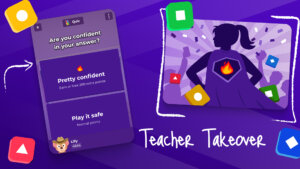
Promoting reflection in the classroom
Educators consistently point to metacognition as the biggest benefit of confidence mode (SM Fleming, 2024). When students have to decide whether to mark themselves as confident, they pause and self-assess. That moment of reflection matters. These moments of reflection are powerful reminders that learning isn’t only about content—it’s about developing the skills to evaluate our own understanding.
One teacher shared that her students became noticeably more careful in their thinking once they realized their confidence rating affected their score. Another described the value of watching a student who was “too confident” discover they need to review more, while another student grew more self-assured after realizing she knew more than she thought (Ambassador Denise M., Brazil, 2025). These moments of reflection are powerful reminders that learning isn’t only about content—it’s about developing the skills to evaluate our own understanding.
Insights beyond the right and wrong
For teachers, confidence mode offers something traditional assessments often miss: a way to see the whole picture. Instead of just knowing whether students are correct, educators can instantly spot when a misconception is paired with overconfidence—or when quiet uncertainty undermines strong knowledge.
This feedback loop helps teachers respond more effectively. As one educator explained, the mode gives “instant data not only on student knowledge, but also on their self-awareness and confidence levels.” That information makes it easier to identify who needs support, who may need encouragement, and where the class as a whole might need to revisit a concept. No longer are teachers planning out lessons without context of student understanding and comprehension. This reflective component embedded into confidence mode allows educators to create adaptive and responsive learning environments and curriculum!
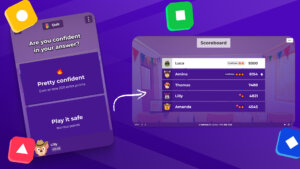
From review to reflection
Teachers are already finding creative ways to use confidence mode. Many use it as a review activity before tests, allowing them to quickly see which concepts students feel secure in and which ones make them hesitate. Others integrate it into regular checks for understanding, where it becomes a tool for both assessment and student growth.
One teacher summed it up perfectly: “Confidence mode helps me tell the difference between what students actually know and when they’re just guessing correctly.” By turning self-reflection into part of the game, the mode encourages students to think more critically, while giving teachers sharper insights to guide their instruction.
Try confidence mode in your next kahoot
Confidence mode allows students to think deeper, while still maintaining the lively, energetic, and interactive spirit of Kahoot! learning. With just one extra click, students are encouraged to take ownership of their learning, while teachers gain a fuller picture of what’s happening behind the answers.
Next time you launch a kahoot, give confidence mode a try. A small change in the game might just spark a big shift in how your students see themselves as learners.