


Making it through a company layoff with one’s job intact can be difficult enough, but for remaining employees, the challenges are just beginning. As workers are tasked with new responsibilities, many find themselves stepping into new roles that require knowledge and skills they may not have. This is especially true for Gen Z employees, who often have less professional experience under their belt to prepare them for rapid change.
In Kahoot!’s recent Layoff Survivor Survey, 77% of Gen Z employees admitted to making costly mistakes or feeling unprepared or hesitant to act at work because of a lack of training after layoffs. Beyond the impact on morale, this lack of preparedness can lead to declines in productivity, efficiency and performance as employees struggle to understand and complete their new responsibilities. These challenges can create ripple effects that continue to impact the company long after the initial layoffs.

These findings should be a red alert for workforce leaders and training professionals. Gen Z already makes up over a quarter of the global labor force, and is expected to become the largest working generation by 2035, meaning companies can’t afford to let this group fall behind.
While all layoffs affect productivity and performance at least temporarily — especially for younger employees who are still developing core professional skills — a strong re-onboarding strategy can significantly accelerate recovery. Done well, re-onboarding helps employees adapt more quickly and equips them to be more agile and successful long term.
So, how can companies shorten the impact of workforce disruptions and help Gen Z reach new levels of productivity? Let’s examine these data-driven strategies:
1. Identify and Fill Priority Skills Gaps
To help employees avoid wasting time trying to learn how to accomplish their new tasks, training professionals should start the re-onboarding process by identifying employees’ key knowledge and skills gaps. Some may be lacking technical knowledge, while others may still be struggling with foundational professional skills such as time management and team collaboration. This step is especially critical for Gen Z employees whose education or first working years were disrupted by the pandemic, leaving many to fall behind in essential skill building and career readiness.
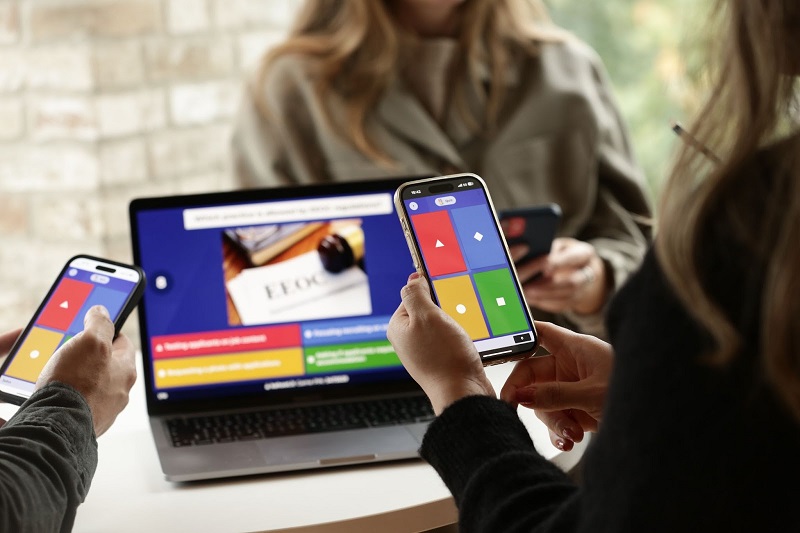
To start mapping out employees’ capabilities and needs, training professionals can use formative assessment strategies, which research shows improve learning outcomes. Low-stakes activities such as quizzes, surveys and self-reflections allow trainers to gauge understanding and monitor progress. These can provide valuable insights into where employees need more support, helping trainers design personalized learning plans that can get employees up to speed quickly.
2. Engage Gen Z and Power Efficient Re-Onboarding With Microlearning
All employees expected to take on new responsibilities after a layoff should be provided with learning support, but for Gen Z, it’s an absolute must. This is especially true for Gen Z employees who are also recent hires, who may not know who they can ask for help. Re-onboarding offers a valuable opportunity to reconnect Gen Z employees with available resources and help them build relationships across the organization, which can improve their resiliency and adaptability in the future.
However, as many employees take on heavier workloads after layoffs, re-onboarding must be efficient. Learning must be flexible, relevant and engaging. This is why microlearning can be one of the most powerful re-onboarding strategies. In this approach, employees complete bite-sized learning experiences that deliver only the most important information. By making these experiences interactive and even gamified, trainers can not only boost engagement but also improve learning retention. When training sticks the first time, it can reduce the need for repetition and speed up the process toward full workplace competence.
3. Speed Up Knowledge Exchange With Integrated Communication
While re-onboarding can address many immediate changes post-layoff, it’s unrealistic to prepare employees for every shift in a single program. This is why learning should be embedded into ongoing internal communications. Bite-sized updates can provide timely knowledge and guidance exactly when employees need it.
For Gen Z, this approach reinforces relevance and increases attention. Interactive elements such as polls, quizzes and open-ended prompts also allow leaders to gather continuous feedback, surface concerns and identify areas where additional support is needed.
Rebuilding productivity after layoffs is not easy — for trainers or employees. However, it presents an opportunity to reimagine how work gets done. Gen Z brings fresh perspectives that can transform workplaces, and with the proper guidance and support, they can grow into the innovative and agile leaders organizations will need in the future.
Get started engaging Gen Z workers and equipping them for next-level productivity with Kahoot! 360, the ultimate workforce engagement platform.
This blog post is based on an article originally published in Training Industry.